
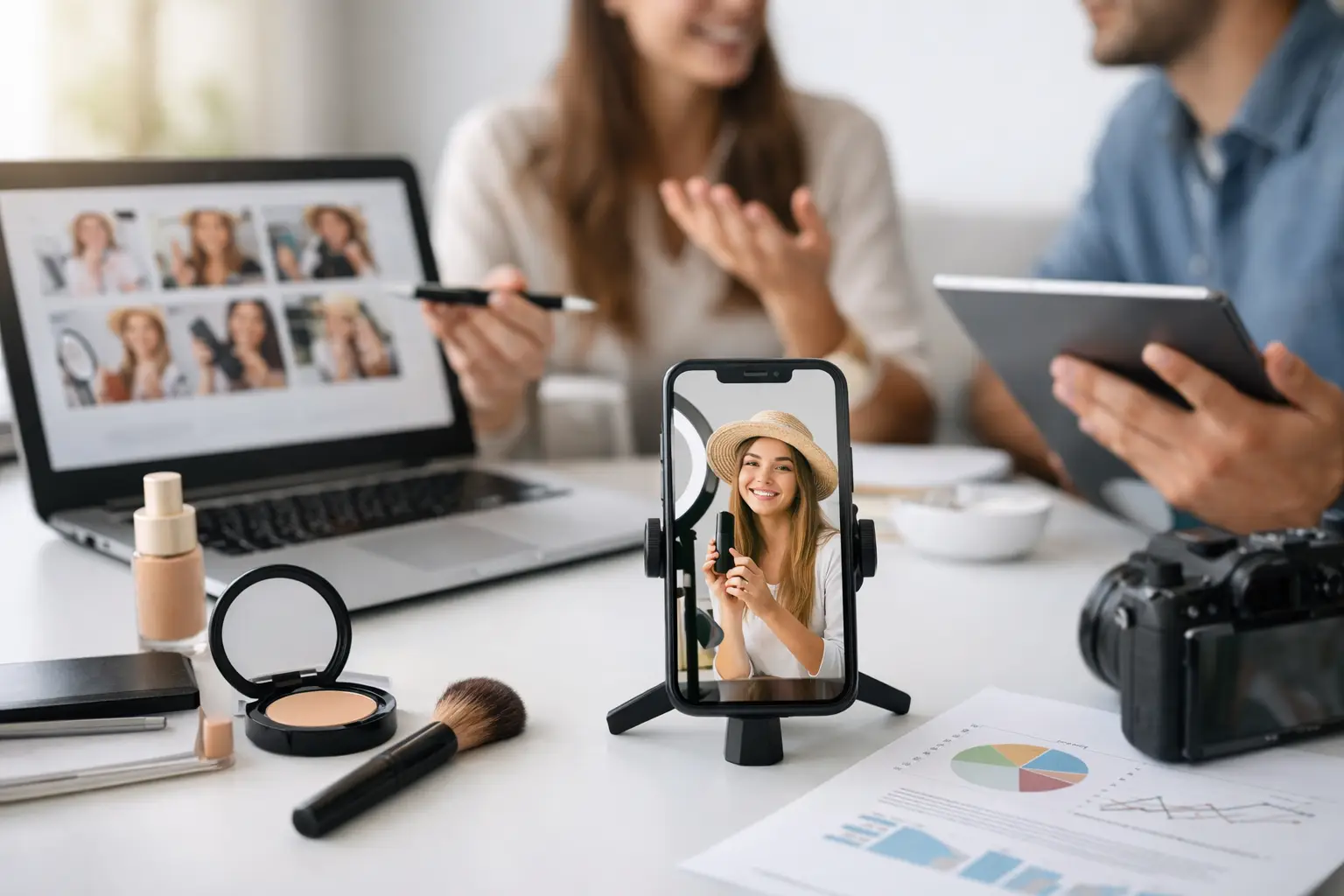
Most influencer campaigns do not fail because the content is poor. They fail much earlier – at the strategy stage, when the brief is vague, the creator mix is wrong, or success is defined as “awareness” with no commercial plan behind it. A strong influencer marketing strategy example is useful because it shows what a campaign should look like before outreach starts, budgets are agreed and content goes live.
For brands, that means knowing exactly why creators are being used and what role they play in the wider media mix. For influencers, it means understanding what a commercially serious campaign looks like and why some partnerships turn into repeat work while others stay one-offs. The difference is rarely luck. It is structure.
A practical influencer marketing strategy example
Take a UK beauty brand preparing to launch a new mid-market skincare product. The product is not unknown, but it is entering a crowded category with established competitors, aggressive paid social activity and a lot of noise from creators already promoting similar items. The brand has a six-week launch window, a fixed budget and two commercial goals: build credible product awareness among women aged 25 to 40, and generate measurable sales through a retail partner and direct-to-consumer channels.
In that case, the influencer strategy should not start with a list of the biggest beauty creators available. It should start with the campaign job. Is the priority to create social proof, educate a target audience, drive immediate conversions, or support retailer sell-through? In this example, the answer is a mix of awareness and conversion, which means the creator plan needs layers.
At the top of the campaign, a small number of trusted mid-tier beauty creators can establish credibility and give the launch visibility. These are the faces likely to produce polished hero content, explain product benefits clearly and set the tone for the campaign. Around them, a wider group of micro-influencers can deliver volume, more relatable recommendations and stronger engagement rates. If the product has a clear skincare result, testimonial-led content from creators with highly engaged niche audiences often outperforms broad lifestyle placements.
That is the first strategic point many brands miss. Reach matters, but relevance matters more. A creator with 40,000 highly engaged followers in skincare can be more commercially useful than a general lifestyle account with ten times the audience.
What this strategy example includes
A sensible campaign structure for this kind of launch would split the budget across three areas: creator fees, content usage and paid amplification. Brands often spend heavily on influencer posts and leave nothing for whitelisting, paid social boosting or usage rights. That limits the commercial value of the content almost immediately.
In this influencer marketing strategy example, the brand works with twelve creators. Three mid-tier beauty names lead the campaign with dedicated launch content on Instagram and TikTok. Six micro-creators produce review-style content focused on product experience, texture, routine fit and before-and-after storytelling where appropriate and compliant. Three additional creators sit slightly outside beauty but still overlap with the target audience – perhaps in wellness, working motherhood or travel – to show the product in a broader lifestyle context.
This mix gives the campaign breadth without losing category relevance. It also reduces risk. If one creator underdelivers, the campaign is not overexposed to a single profile.
The briefing stage
The brief should be commercially clear, not padded with brand language. Creators need the campaign objective, the product truth, the target audience, mandatory messaging, creative boundaries, deadlines and approval process. They also need to know what success looks like.
For the beauty launch above, the brief might ask hero creators to demonstrate the product within a real routine, explain the skin concern it addresses and direct followers to a trackable sales route. Micro-creators may have more flexibility, provided they stay within agreed claims and disclosure rules. Over-scripted content usually performs poorly, but so does no direction at all. The right approach is controlled freedom.
This is also where experienced agencies earn their keep. Matching a creator to a campaign is not just about audience demographics. It is about tone, credibility, historical brand fit, content style and whether that creator can actually deliver against the objective.
Creator selection and rate logic
Creator selection should balance audience quality, content quality and commercial suitability. Follower count is one data point, not the strategy.
A proper review includes engagement quality, audience geography, previous paid partnerships, platform strength, brand safety, category saturation and whether the creator has already promoted direct competitors. In skincare especially, over-commercialised feeds can blunt impact. If every third post is a paid beauty placement, the audience becomes harder to move.
Rates should reflect the real deliverables and rights involved. Brands that chase the cheapest talent often pay twice – once for weak performance and again to replace it. Equally, not every campaign needs premium-priced names. It depends on whether the creator is there to build trust, reach a niche, generate content assets or drive direct response.
For creators, this is where professional representation matters. Fair commercial rates are not just about maximising a single fee. They protect long-term value and stop creators being boxed into underpriced deals that include broad usage and repeated revisions for little return.
How the campaign runs in practice
Week one focuses on seeding and creator onboarding. Product arrives early, creators test it properly and the team confirms concepts before production. If the item needs time to show results, the timeline must allow for that. One of the quickest ways to undermine a skincare campaign is to rush testimonial content before the creator has had enough use.
Week two and three deliver the main launch burst. Hero creators post first to establish campaign visibility and social proof. Micro-creators follow with staggered content, helping maintain frequency and extending reach over a longer period rather than creating one sharp spike and then disappearing.
At the same time, the strongest-performing assets are identified early for paid usage. This is where strategy becomes more commercially effective. If one creator’s TikTok is driving strong watch time and click-through, the brand should not leave that performance sitting in organic only. Good influencer content can become a serious paid asset when rights have been agreed in advance.
Week four to six shift towards optimisation. That may mean reallocating spend behind top-performing content, commissioning one or two fast-turnaround follow-up posts, or pushing high-converting creator assets harder with retail messaging if retailer demand is stronger than direct sales. The point is not to lock the campaign and hope for the best. It is to manage it actively.
What success looks like in this influencer marketing strategy example
Measurement should match the campaign objective. If the campaign is built to support awareness and sales, then reporting should include both. Reach, impressions, views, engagement rate, saves and sentiment matter because they show whether the content landed. But on their own, they are not enough for a commercially serious campaign.
The brand should also track link clicks, code usage, landing page behaviour, assisted conversions and any uplift at retailer level where that data is available. Not every creator will be a direct sales driver. Some will be stronger at top-of-funnel trust building, while others are naturally better at prompting action. That is normal.
What matters is understanding each creator’s role. The campaign should not judge a credibility-led mid-tier creator by the same metric as a discount-code-driven micro-influencer. Different jobs require different benchmarks.
This is another reason strategy comes before talent outreach. Without a clear performance framework, campaign analysis becomes selective. Teams end up celebrating vanity metrics or dismissing useful creator partnerships because they were measured against the wrong outcome.
The trade-offs brands need to understand
There is no single perfect structure. A tighter creator group gives more control and easier management, but it can limit audience spread. A broader group increases reach and content variety, but it adds complexity. Premium creators can elevate perception quickly, but they absorb budget fast. Micro-influencers often deliver stronger efficiency, but they need sharper coordination.
Platform choice also depends on the job. TikTok may drive discovery and product demonstration. Instagram may be better for polished social proof and community response. YouTube can be valuable for deeper consideration if the product needs explanation. The right channel mix depends on the buying journey, not trend chasing.
For brands and agencies, the lesson is simple. Do not start with who is available. Start with what the campaign needs to achieve, then build the creator mix, content plan, rights package and measurement model around that.
For creators, the same logic applies from the other side. The strongest long-term partnerships usually come from campaigns where expectations are clear, rates are fair and the brand sees the creator as part of a wider commercial plan rather than a quick post.
That is what turns an influencer activation into a proper marketing channel. And when the strategy is right, the campaign does not just look good on a report – it creates value that can be repeated, refined and scaled.
Follow us on Social Media


