
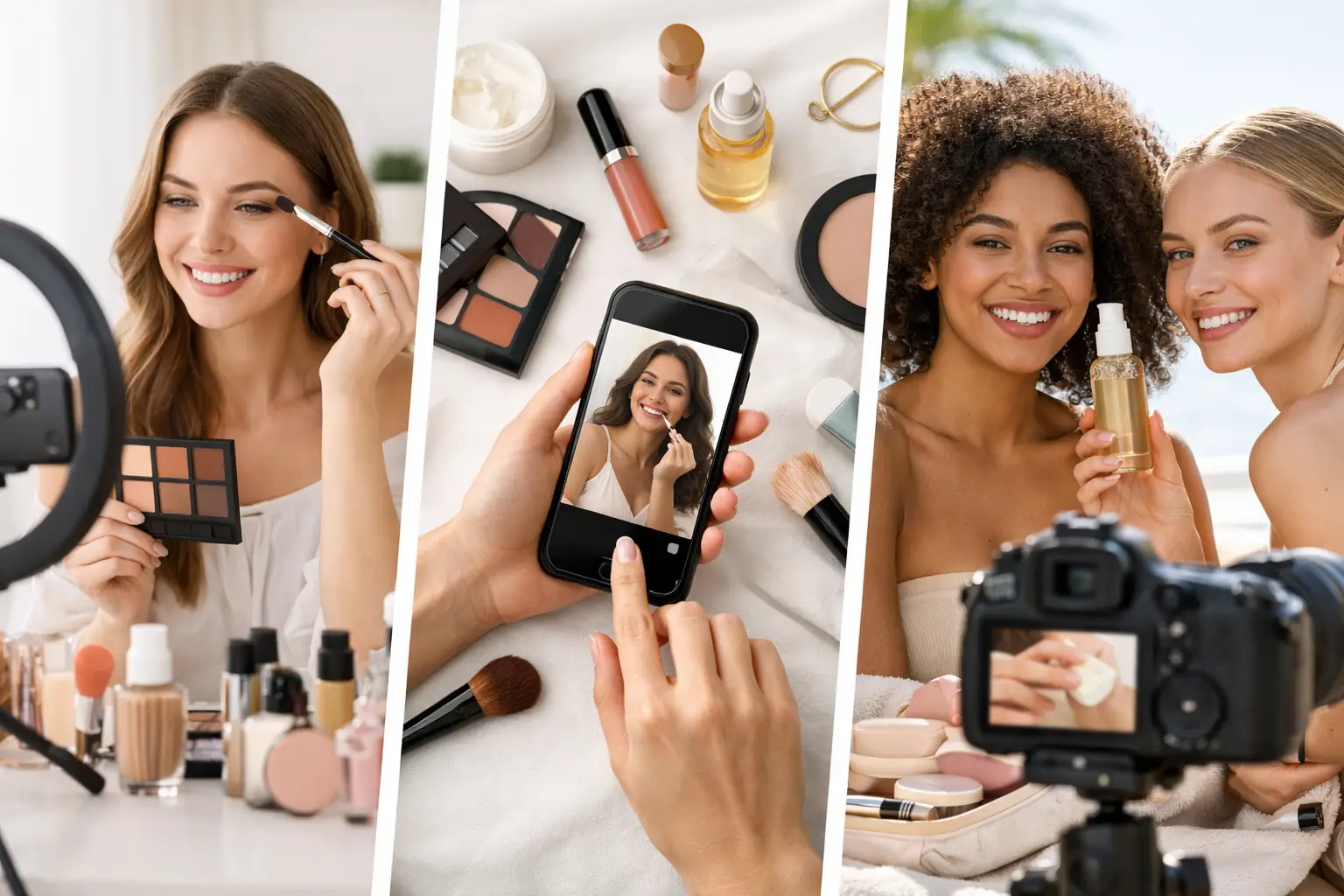
A beauty launch can have flawless packaging, a strong formula and a sizeable paid-media budget, then still fail to gain traction if people cannot see how it fits into a real routine. The best beauty influencer campaign examples solve that commercial problem. They put products in the hands of creators whose audiences already trust their technique, taste and honesty.
For brand teams, the lesson is not to copy a viral post. It is to understand the campaign structure behind it: why the creator was credible, what content format made the product easy to understand, and how the brand gave people a reason to act.
What makes a beauty creator campaign effective?
Beauty is one of the most competitive creator categories. Audiences are highly product-aware, quick to spot an undeclared advert and often sceptical of claims that sound too polished. A good campaign therefore needs more than reach. It needs a clear role for each creator, a brief that protects key product messages without flattening their voice, and measurement that goes beyond likes.
The strongest work usually combines education and evidence. A make-up artist can demonstrate application; a skincare creator can explain where a serum sits in a routine; a lifestyle creator can show how a product performs during a busy day. These are different jobs, so they should not receive the same brief or be judged by exactly the same metric.
Here are ten beauty influencer campaign examples and the practical thinking worth taking from each.
1. Fenty Beauty and the #FentyFace routine
Fenty Beauty launched with a wide foundation shade range, but its creator activity helped turn an inclusion message into visible proof. Beauty influencers and make-up artists created full-face routines featuring the products, demonstrating shades, finishes and techniques on a broad variety of skin tones.
The campaign worked because the creator content did not simply repeat a brand claim. It showed viewers the claim in practice. For complexion launches, swatches and before-and-after footage can be more persuasive than a polished product shot. Brands should also give creators enough time with foundations and concealers to test shade match and wear. Rushing this stage risks a wave of content that looks attractive but lacks credibility.
2. e.l.f. Cosmetics and the Eyes. Lips. Face. TikTok activation
E.l.f.’s original song and TikTok challenge turned the brand name into a participation mechanic. Rather than asking creators to deliver standard sponsored reviews, the campaign gave users and influencers a simple creative prompt that was designed for the platform.
The strategic point is clear: not every campaign needs a detailed product demonstration. When the objective is broad awareness, a recognisable sound, repeatable visual cue or accessible challenge can travel further than a conventional advert. However, participation-led campaigns need a strong brand connection. If viewers remember the trend but not the product or the brand, the investment has not done its full job.
3. Glossier and its community-first creator model
Glossier built much of its early momentum by treating customers and smaller creators as a source of influence, not just a distribution channel. Its social presence made everyday routines, bathroom-shelf content and customer recommendations feel central to the brand story.
This remains a useful model for brands launching products with loyal, niche appeal. Micro and mid-tier creators may not deliver the headline reach of a celebrity partnership, but they can generate detailed comments, useful product questions and stronger signals of intent. The trade-off is operational: managing a larger creator group requires careful outreach, clear contracting, content approvals and reporting.
4. CeraVe and the Michael Cera Super Bowl moment
CeraVe’s campaign around actor Michael Cera played with the idea that he might somehow be behind the skincare brand. Creators, social commentary and PR fuelled the speculation before the reveal, creating an unusually high level of conversation for a dermatologist-developed skincare proposition.
The value here was not celebrity for its own sake. The campaign gave creators something entertaining to react to, remix and discuss. For brands, this is a reminder that paid creator content can be more effective when it is part of a wider campaign narrative. A creator post should feel like a chapter in the story, not an isolated media placement.
5. Dove and #DetoxYourFeed
Dove’s #DetoxYourFeed activity enlisted creators to confront the effect of harmful beauty content and unrealistic appearance ideals online. The message aligned with the brand’s established purpose while giving creators room to discuss their own relationship with social media.
Purpose-led beauty campaigns need that degree of alignment. Audiences will challenge a brand that uses body confidence or mental wellbeing as a short-term marketing angle while its product messaging says something different. If the purpose is genuine, select creators with relevant lived experience or editorial authority, and allow them to speak in a way that feels considered rather than scripted.
6. Rare Beauty and creator-led product discovery
Rare Beauty’s Soft Pinch liquid blush became a regular fixture in creator tutorials, comparisons and ‘get ready with me’ videos. The content showed the high-pigment formula, demonstrated how little product was needed and made colour selection feel manageable.
This is a strong example of how a product feature can become a content hook. A campaign brief can ask creators to focus on one genuinely distinctive behaviour: a one-dot application, a wear test, a shade comparison or a routine shortcut. The key is to avoid forcing a gimmick. If a product does not have a visible demonstration point, concentrate on the outcome, occasion or audience need instead.
7. Charlotte Tilbury and the Pillow Talk franchise
Charlotte Tilbury has repeatedly built creator content around Pillow Talk as a recognisable beauty look, not just a single lipstick shade. Influencers can create a soft glam routine, show variations by skin tone or use the collection for a wedding, event or evening look.
The campaign lesson is in building a platform that can sustain multiple launches. When a hero product has strong recognition, brands can use creator partnerships to extend it across formats and audiences rather than starting from zero each time. This works best when the product is sufficiently versatile. A narrowly seasonal shade may need a shorter, more focused burst of activity.
8. L’Oréal Paris and expert-led hair education
Haircare campaigns often perform better when creators demonstrate a routine rather than holding up a bottle. L’Oréal Paris has consistently worked with hair professionals, beauty creators and talent to show colour maintenance, styling and repair in practical terms.
For products involving technical claims, expert creators provide reassurance and context. A hairdresser can explain how to use a treatment without overloading fine hair; a colourist can show what a gloss or mask can realistically achieve. Brands should be precise about approved claims, particularly around repair, protection and results, while leaving enough room for the creator’s own method.
9. MAC Cosmetics and artist authority
MAC has long benefited from associations with professional make-up artistry, using creators and artists to translate runway-inspired looks into wearable tutorials. This approach makes sense for a brand with a broad product range and high creative equity.
A professional artist partnership is particularly useful when the campaign objective is consideration rather than immediate mass awareness. Their audience may be smaller than a mainstream lifestyle creator’s, but their recommendation can carry more weight for beauty enthusiasts. The right creator mix may include artists for authority, mid-tier beauty talent for detailed tutorials and larger personalities for reach.
10. Sephora’s creator community and retail-led content
Sephora has used creator communities and product-led social content to make discovery feel like a shared retail experience. Hauls, favourites, newness round-ups and seasonal edits create a natural route from recommendation to purchase consideration.
Retailer campaigns offer a useful model for brands with several products to promote. Rather than expecting one creator to cover an entire range, assign a focused role: a skincare edit, a fragrance recommendation, a make-up starter kit or a holiday gifting selection. This makes the content more useful and reduces the risk of a post reading like a catalogue.
Turning beauty influencer campaign examples into a workable plan
The common thread across these campaigns is not follower count. It is fit. The creator, product, platform and campaign objective have to support each other. A creator with a loyal acne-prone skincare audience may be an excellent partner for a barrier-repair launch, but not necessarily for a high-glam fragrance campaign. A viral TikTok concept may build awareness, while a YouTube tutorial or Instagram carousel may do more for consideration.
Start with the commercial outcome. Are you launching a new product, improving awareness, driving retailer searches, collecting usable content assets or changing perceptions of an existing range? That decision shapes creator selection, deliverables and reporting.
Then build a brief with enough discipline to protect the investment. Include mandatory disclosures, approved claims, key product facts, usage guidance, deadlines and content rights. Avoid writing every spoken line. The audience follows the creator for their perspective, and overly controlled content normally delivers weaker engagement and less believable recommendation.
Measurement should reflect the job assigned to the content. Reach, video views and watch time are useful for awareness. Saves, comments, profile visits, retailer searches, tracked sales and code usage can signal stronger intent. Sentiment also matters in beauty, where comment sections often reveal concerns about shade range, price, ingredients and real-world performance.
Campaign delivery is where experience earns its value. Creator vetting, fair rate negotiation, contracts, compliance checks, content curation and live reporting all affect results. Colossal Influence approaches this as a commercial process, matching brands with creators who can deliver relevant, credible work rather than simply filling a list with large audiences.
The most valuable beauty partnerships are rarely one-off posts that disappear after 24 hours. Give the right creator a product they can genuinely use, a role they understand and a reason to return to the conversation. That is how a campaign moves from visibility to trust – and from trust to measurable brand value.
Follow us on Social Media


