
Think of influencer marketing services as your expert guide through the sometimes-choppy waters of social media. Trying to run a campaign on your own can feel a bit like sailing into a storm without a compass – you might get somewhere, but it’s unlikely to be your intended destination.
These services are far more than just a Rolodex of creators. They’re a fully managed solution, a strategic partner that acts as an extension of your own marketing department. They handle everything from finding the perfect creators to dotting the i’s on contracts and crunching the final numbers.
What Exactly Are Influencer Marketing Services?
Imagine you want to build your dream house. You wouldn’t just buy a pile of bricks and hope for the best, would you? You’d hire an architect to draw up the plans and a project manager to oversee the entire build, ensuring every detail is perfect.
Influencer marketing services are the architects and project managers of your brand campaigns. They lay the strategic groundwork, manage the entire construction process of the campaign, and make sure the final result is a solid structure that delivers real value.
Your Strategic Marketing Partner
A good agency won’t just point you towards the biggest names with the most followers. That’s the easy part. Their real value lies in knowing the landscape inside and out. They know which micro-influencers have built incredibly tight-knit, trusting communities that are perfect for a niche product.
They essentially build a bridge between your brand and the right audience, using creators as the pillars.
This partnership really breaks down into a few key areas:
- Strategy Development: They don’t just jump in. First, they figure out your business goals and build a bespoke influencer strategy to match, picking the right platforms and people.
- Creator Sourcing and Vetting: This is a huge time-saver. They find, screen, and vet creators to make sure their audience, content style, and personal values are a perfect fit for your brand.
- Campaign Management: All the admin and logistics you don’t want to deal with. That means outreach, negotiating contracts, briefing creators on the content, and handling all the payments.
- Performance Analysis: They go way beyond just counting likes. A proper agency tracks the metrics that actually matter to your bottom line, showing you a clear return on your investment.
In short, these services strip away all the guesswork and heavy lifting from your campaigns. They replace the endless hours of scrolling and emailing with a data-led process that’s built for success.
When you bring in an agency, you’re not just buying access to influencers; you’re investing in deep expertise. They’re constantly navigating the shifting sands of social media algorithms, managing tricky creator relationships, and making sure everything is above board legally.
This frees up your team to focus on the big picture, confident that the campaign is being executed flawlessly. Their entire purpose is to make the process smooth, impactful, and perfectly aligned with what your business needs to achieve.
The Anatomy of an Agency Partnership
Thinking about influencer marketing services as a single line item on a menu doesn’t really do it justice. It’s much more like a multi-course dining experience, where every part is carefully designed to build up to a brilliant final result. When you partner with an agency, you’re stepping into a structured process, usually built around three core pillars that take your brand from a rough idea to a fully-fledged, measurable campaign.
This structured approach means nothing is left to chance. Every single step, from the first brainstorm to the final report, is part of a deliberate workflow created to get the most impact and keep risks to a minimum.
Let’s break down what those essential components look like.
Strategic Development and Influencer Sourcing
This is the foundation, the architectural blueprint for the whole campaign. Before a single creator is contacted, a good agency spends real time getting under the skin of your brand—its unique identity, your specific business goals, and the audience you actually want to talk to. It’s all about asking the right questions: Are we trying to build brand awareness, drive direct sales, or maybe educate an audience on a new product?
Once those objectives are crystal clear, the hunt for the right people begins. This is a world away from just scrolling through social media feeds. Agencies use a smart mix of sophisticated software and genuine human expertise to pinpoint creators who are a perfect match.
Key activities in this phase include:
- Audience Analysis: Defining your ideal customer and mapping that profile to different influencer audiences.
- Creator Vetting: Taking a deep dive into a creator’s past content, engagement metrics, and audience sentiment to make sure they’re brand-safe and, most importantly, authentic.
- Creative Strategy: Brainstorming campaign concepts that feel completely natural for both the brand and the influencer, ensuring the final content genuinely connects with their followers.
This infographic shows just how powerful influencer collaborations are for getting your brand noticed by the right people.
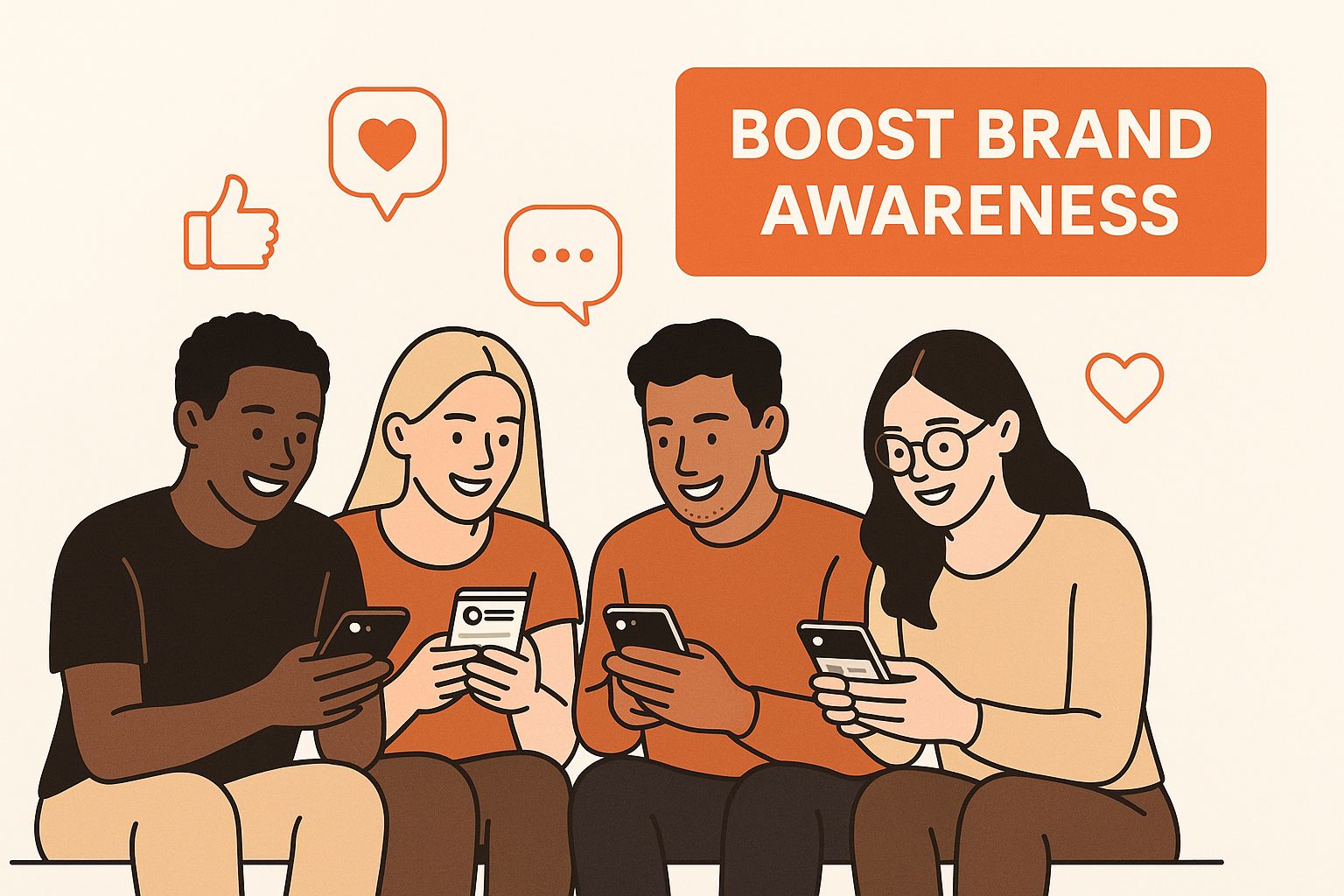
The visual really hits home on the main goal for many campaigns: embedding a brand’s message within trusted social circles to build that all-important recognition and credibility.
Campaign Management and Content Production
With a solid strategy and a hand-picked list of influencers, the campaign kicks into the execution phase. This is where an agency’s project management chops become absolutely essential, as they handle all the logistical headaches that can quickly swamp an in-house team. This pillar is all about turning plans into action.
Think of the agency as the campaign’s central nervous system. They coordinate all communication, manage the timelines, and make sure every piece of content meets brand guidelines and legal requirements. From the first outreach email to the final post going live, they’ve got it covered.
This stage is where an agency truly earns its keep. It’s a delicate dance of meticulous organisation, firm but fair negotiation, and a deep understanding of how content gets made, freeing up your team from all that administrative heavy lifting.
The use of AI is also making a huge difference here. A recent study found 66.4% of marketers get better results by using AI tools to find the best influencers and fine-tune their content. This tech-savvy approach is often paired with a focus on building proper, long-term influencer partnerships—a strategy that 47% of marketers now favour. You can learn more about the latest trends in the influencer marketing benchmark report.
Performance Analytics and Reporting
The final pillar of any professional influencer marketing service is measurement. A campaign isn’t really finished until you’ve properly analysed its impact. A top-tier agency goes way beyond surface-level “vanity metrics” like likes and comments to measure what actually matters to your business.
They connect the campaign’s performance directly back to your initial goals, giving you a clear, honest picture of your return on investment (ROI). This means tracking a whole range of key performance indicators (KPIs) and then pulling all that data into a report that’s easy to understand.
This reporting loop is what makes future campaigns even better. The insights from one campaign are used to sharpen the strategy for the next one. It’s a constant cycle of doing, measuring, and optimising that drives real, sustainable growth. This data-first approach is what turns a one-off success into a reliable, long-term marketing channel.
To give you a clearer picture, here’s a quick summary of how these services typically break down.
Key Influencer Marketing Services at a Glance
| Service Area | Objective | Typical Activities |
|---|---|---|
| Strategy & Sourcing | To build a strong campaign foundation and find the perfect influencer partners. | Brand discovery, audience analysis, creator vetting, campaign concept development, negotiation. |
| Campaign Management | To ensure the campaign runs smoothly, on time, and on budget. | Project management, content review, compliance checks, influencer communication, payment processing. |
| Analytics & Reporting | To measure campaign success and provide actionable insights for future growth. | KPI tracking, performance analysis, ROI calculation, creating comprehensive reports, optimisation recommendations. |
As you can see, a proper agency partnership is a comprehensive system designed to manage every aspect of the influencer marketing lifecycle, from big-picture strategy to the nitty-gritty details of execution and reporting.
Why Smart Brands Invest in Agency Expertise
Thinking about handling your influencer marketing in-house? It can feel like the cheaper option, but it’s often a false economy. The hidden costs—time, missed opportunities, and the inevitable rookie mistakes—can stack up surprisingly fast. Teaming up with a professional service isn’t just about handing off tasks; it’s a strategic move that brings efficiency, deep expertise, and a much better return on your investment.
Many brands don’t realise the sheer mountain of work involved. You’re not just finding a creator and hitting ‘go’. You’re identifying and vetting dozens of potentials, negotiating contracts, managing endless content approvals, and processing every single payment. It’s a massive administrative weight. An agency lifts all of that, freeing up hundreds of hours for your team to focus on what they do best.
Unlocking Established Networks and Favourable Rates
A seasoned agency doesn’t start from a blank slate. They walk in the door with a curated network of reliable, high-performing influencers. They’ve spent years building these relationships, so they know who delivers incredible content, who has a genuinely engaged audience, and, frankly, who is a nightmare to work with. This insider knowledge dramatically cuts down the risk of a bad partnership.
On top of that, agencies often get preferential rates. Because they manage campaigns for multiple clients and offer influencers a steady stream of work, they can negotiate pricing that a single brand just can’t get on its own. These direct cost savings can often cover a good chunk of the agency’s management fee.
An agency partnership transforms your influencer outreach from a series of cold calls into a warm introduction. You gain immediate credibility and access to a pre-vetted pool of talent, ensuring your campaign starts on the strongest possible footing.
This kind of access is vital in today’s market. Influencer marketing has become a dominant force in the UK, with spending hitting £896 million in 2023. With 84% of UK Generation Z and over two-thirds of millennials following influencers, getting your brand seen by these audiences is non-negotiable.
Navigating Complex Legal and Compliance Waters
The rules around influencer marketing are always changing and can be a legal minefield if you’re not careful. Disclosing sponsored content isn’t just good practice; it’s a legal requirement enforced by bodies like the Advertising Standards Authority (ASA) here in the UK. One wrong move could lead to hefty fines and serious damage to your brand’s reputation.
An agency’s expertise here is priceless. They make sure every piece of content follows the latest guidelines, from using the right hashtags (like #ad) to clear in-video disclosures. This protects your brand from costly legal headaches and keeps the trust you’ve built with your audience intact.
An agency will typically manage key compliance areas, including:
- Ad Disclosure: Ensuring all sponsored content is clearly and correctly labelled according to ASA and platform rules.
- Contractual Protection: Drafting solid contracts that cover content usage rights, exclusivity, and key deliverables.
- Product Claims: Vetting influencer content to make sure no one is making unsubstantiated or misleading claims about your product.
Achieving a Higher Return on Investment
At the end of the day, the biggest reason to invest in influencer marketing services is the superior return on investment (ROI). Agencies combine their industry know-how, data tools, and strategic oversight to build campaigns that consistently blow DIY efforts out of the water. They know which metrics actually matter and how to tweak campaigns on the fly to boost performance. To see what this looks like in practice, check out these successful influencer marketing case studies.
By focusing on data-driven creator selection and smart strategy, they turn what could be a speculative marketing spend into a predictable, scalable way to grow your business. This approach ensures your budget is spent effectively, delivering real, measurable results that hit your business goals. You can take a deeper dive into the benefits of influencer marketing and see just how it drives success.
How to Choose the Right Agency Partner in the UK
Picking an influencer marketing agency isn’t just another item on a procurement checklist; it’s about finding a genuine partner. You need a team that gets your brand’s voice, understands your goals, and fits your company culture. Get this right, and the agency becomes a natural extension of your own team, driving authentic campaigns that deliver real results.
Making the right choice means looking past the slick sales pitch and digging into how an agency actually works. You’re looking for expertise, a solid process, and total transparency. The best partnerships are built on a shared vision and great communication, so knowing what to look for is half the battle.
Evaluate Their Niche Expertise and Track Record
Let’s be clear: not all influencer marketing services are the same. An agency that kills it for fast-fashion brands might be completely lost trying to market B2B software. Your first move should be to check they have real, proven experience in your specific industry or one that’s very similar.
An agency with the right expertise already knows your audience. They know where they hang out online, what content they love, and what makes them tick. This kind of insider knowledge saves you a ton of time and helps you dodge expensive mistakes. They won’t be learning your industry on your dime; they’ll be hitting the ground running from day one.
When you’re checking their track record, ask for detailed case studies. Zero in on campaigns they’ve run for brands that look like yours in terms of size and sector.
As you review their past work, look for:
- The Challenge: Did they really grasp the client’s problem or goal?
- The Solution: Was their strategy clever, well thought out, and genuinely built to solve that specific challenge?
- The Results: Can they show you hard data that goes beyond vanity metrics? You want to see numbers on sales lift, lead generation, or website traffic.
Scrutinise Their Influencer Vetting Process
The quality of an agency’s influencers says everything about the agency itself. A rushed or lazy vetting process is a massive red flag. It can lead to brand safety nightmares or campaigns that just don’t land. You need to know exactly how they find, screen, and choose creators.
A solid vetting process goes way beyond just looking at follower counts. A top-tier agency will dive deep, analysing an influencer’s audience demographics, the quality of their engagement (are people having real conversations, or is it just a sea of fire emojis?), and their content history to ensure they’re a perfect—and safe—fit for your brand.
A great agency acts as your brand’s guardian. Their vetting process should be designed to spot fake followers, flag controversial past content, and ensure a creator’s personal brand genuinely aligns with your company’s values.
Don’t be afraid to ask them direct questions about how they do it. Try asking, “What tools and manual checks do you use to analyse an influencer’s audience health?” or “How do you assess brand alignment beyond their content niche?” The quality of their answers will tell you everything you need to know about their diligence.
Demand Transparency in Pricing and Reporting
When it comes to your money and your results, clarity is everything. A trustworthy partner will be completely upfront about their fee structure and what you’re getting for your investment. Vague proposals or hidden costs are a sure sign of a headache waiting to happen.
Whether they charge a monthly retainer, take a cut of influencer fees, or work on a fixed project rate, you should get a detailed breakdown of every single cost. This means seeing the agency’s management fee, the budget for paying influencers, and any extra costs for things like content production or paid ads. This level of financial honesty is the bedrock of trust.
Just as important is how they report back to you. You need to know how they define success and how often you’ll get updates on progress.
A strong reporting framework should always include:
- Defined KPIs: Key Performance Indicators should be agreed right at the start and tied directly to your business goals.
- Regular Updates: A clear schedule for weekly, bi-weekly, or monthly reports that track progress against your KPIs.
- Actionable Insights: A report shouldn’t just be a spreadsheet full of numbers. It should explain what the data actually means and give you recommendations for making the campaign even better.
Finding a specialist UK influencer agency that lives by these principles is the key to building a successful, long-term strategy for your brand.
Key Questions to Ask a Potential Agency Partner
To cut through the sales talk and get a real sense of an agency, you need to ask the right questions. These are designed to uncover their strategic thinking, their day-to-day processes, and their general approach to partnerships.
Here are a few essential questions to have in your back pocket:
- How do you measure campaign success beyond engagement metrics like likes and comments? This tells you if they’re focused on what actually matters to your business.
- What is your process for influencer communication and content approval? This gives you a window into their project management and quality control.
- How do you handle a situation where an influencer underperforms or doesn’t meet their contractual obligations? This is a great test of their problem-solving and crisis management skills.
- Can you walk me through a campaign that didn’t go as planned and explain what you learned from it? This gauges their honesty and shows you how they learn and adapt.
Their answers will give you a much clearer picture of their capabilities and whether their working style will mesh with your team’s. You’re looking for a partner who gives you thoughtful, detailed answers, not just smooth reassurances.
Decoding Influencer Campaign Costs and Budgets

It’s the question on every brand’s mind when they start exploring professional influencer marketing services: what’s this actually going to cost me? The honest answer is, it depends. There’s no single price tag because costs are shaped by a whole host of different factors.
Think of it like commissioning a piece of art. A small, simple sketch from a new artist will cost a lot less than a giant, complex mural from a famous one. The final price hangs on the artist’s reputation, the materials they use, and even where you plan to display the work. Influencer campaigns work in a very similar way.
Common Agency Pricing Models
Agencies usually structure their fees in a few standard ways, and each one has its own pros and cons. The best fit for you really comes down to the scale of your campaign, whether you need ongoing support, and how flexible your budget is.
- Monthly Retainer: This is where you pay a fixed fee each month for an agreed scope of work. It’s perfect for long-term brand building and keeping up a constant stream of influencer activity, as it allows for a really deep, strategic partnership to develop.
- Commission-Based Fees: With this model, the agency takes a percentage of your total campaign spend, which includes what you pay the influencers and any ad costs. It’s straightforward, but you need to be sure the focus remains on efficiency, not just higher spending.
- Fixed Project-Based Pricing: You agree on one single, all-in price for a specific campaign. It comes with clear deliverables and a set timeline, offering brilliant budget predictability. This is ideal for one-off projects like a big product launch.
Understanding these models is key to finding a partner whose financial structure aligns with your business goals. It ensures transparency from the outset and helps prevent any budget surprises down the line.
Confidence in this marketing channel is growing fast. An estimated 25% of UK marketers now put over 40% of their entire marketing budget into influencer campaigns. Many are also embracing new tech, with about 63% planning to use AI to make their campaigns even more effective.
Key Variables That Influence Campaign Costs
Beyond the agency’s fee structure, several key factors directly impact the overall cost of your campaign. These are the things that determine the resources, talent, and effort needed to hit your goals. Knowing what they are helps you see exactly where your money is going.
The main cost drivers include:
- Influencer Tier: A mega-influencer with millions of followers will naturally command a much higher fee than a nano-influencer with a few thousand. That’s true even if the nano-influencer has a super-engaged, niche audience.
- Content Format and Complexity: A single Instagram Story is far easier and cheaper to produce than a professionally shot and edited YouTube video. Video content, particularly the long-form stuff, will always cost more.
- Platform Choice: Costs can swing quite a bit between platforms. A campaign on TikTok might have totally different pricing dynamics compared to one on LinkedIn, all depending on the audience and content style.
- Usage and Exclusivity Rights: If you want to repurpose an influencer’s content for your own ads or stop them from working with your competitors for a while, you’ll need to pay extra for those rights.
To really get a grip on the value and return you’re getting, it’s vital to master the art of measuring the ROI of social media marketing effectively. Ultimately, having a clear understanding of these financial moving parts means you can work much more effectively with an agency. You can explore a detailed breakdown of the cost of influencer marketing to help you plan your budget with confidence.
Common Questions About Influencer Services
When you first dip your toes into the world of professional influencer marketing services, it’s natural to have a few practical questions pop up. Even when the benefits and processes seem clear, a little uncertainty can stick around. This section is all about clearing up those last-minute queries with straightforward answers.
Think of it as the final check-in before you decide to jump in. We’ll untangle the key differences between your options, set some realistic timelines, and show how businesses of all shapes and sizes can get massive value from expert help. The goal is to give you the confidence to move forward.
Agency vs Platform: What Is the Difference?
One of the biggest points of confusion is telling the difference between an influencer agency and an influencer platform. Both are designed to connect brands with creators, but the experience they offer couldn’t be more different. It’s a bit like comparing a personal travel agent to a DIY booking website.
An influencer platform is basically a huge, searchable database of creators, all powered by software. You pay a subscription fee for access, filter influencers by things like follower count or location, and then you’re on your own. You handle all the outreach, contract talks, and campaign management yourself. It gives you the tools, but you have to be the project manager.
An influencer marketing agency, however, is a full-service partner. They don’t just hand you a list; they give you a dedicated team. This team builds your strategy from the ground up, hand-picks the perfect creators, runs the entire campaign for you, and comes back with a detailed report on how it all went. It’s a ‘done-for-you’ service that’s all about strategy and execution.
The core difference is service versus software. A platform sells you the tools to manage a campaign yourself. An agency provides the expert team to manage it for you, offering strategic guidance and hands-on support every step of the way.
Which one is right for you? It really comes down to your own team’s time, resources, and experience. If you’ve got a dedicated marketing team that knows its way around creator management, a platform could work. If you need strategic guidance and want to take the heavy lifting off your plate, an agency is the way to go.
How Long Until I See Real Results?
This is the big one, but there’s no single, magic number for an answer. The time it takes to see real results from an influencer campaign is tied directly to what you’re trying to achieve. You have to match your expectations to your goals.
For instance, if your main goal is brand awareness, you can see things happen almost immediately. The second an influencer’s post goes live, you’ll see instant movement in metrics like:
- Reach and Impressions: How many people are seeing your brand’s message.
- Engagement: The likes, comments, and shares rolling in on the content.
- Follower Growth: A nice bump in your own brand’s social media following.
But, if your goal is more about conversions and sales, the timeline gets a bit longer. Of course, you might see some sales right away, but the true impact tends to build over time. It can take several weeks, or even a full business quarter, to properly measure the uplift in sales, track customers using unique discount codes, and really figure out the return on your investment. When you’re looking at the bottom line, a little patience goes a long way.
Can Small Businesses Afford These Services?
Absolutely. There’s a common myth that influencer marketing services are only for massive brands with bottomless budgets. The reality is, a good agency can build a strategy that works for a huge range of budgets, including those of small and medium-sized businesses.
The trick is to focus on impact and efficiency, not just sheer scale. For a smaller business, a winning strategy might not involve a household-name celebrity. Instead, an agency can create a powerhouse campaign using a team of highly-engaged micro- or nano-influencers. These creators often have incredibly loyal, niche audiences and can drive amazing results for a fraction of the cost.
On top of that, a smart agency can make a modest budget work much harder by:
- Negotiating value-added extras like more content or longer usage rights for the creative.
- Focusing the budget on a single, high-impact platform instead of spreading it too thin.
- Getting content that can be repurposed across your own marketing channels for long-term value.
For a small business, working with an agency can actually be more cost-effective than trying to do it all in-house. The time you save, the mistakes you avoid, and the better results you get often deliver a return that far outweighs the management fee. For more answers, exploring a full list of frequently asked influencer marketing questions can provide even more clarity.
Ready to unlock the full potential of your brand with a proven, results-driven strategy? The expert team at Colossal Influence is here to build a bespoke campaign that connects you with the right audience and achieves your business goals. Start your influencer marketing journey with us today.
Follow us on Social Media


