
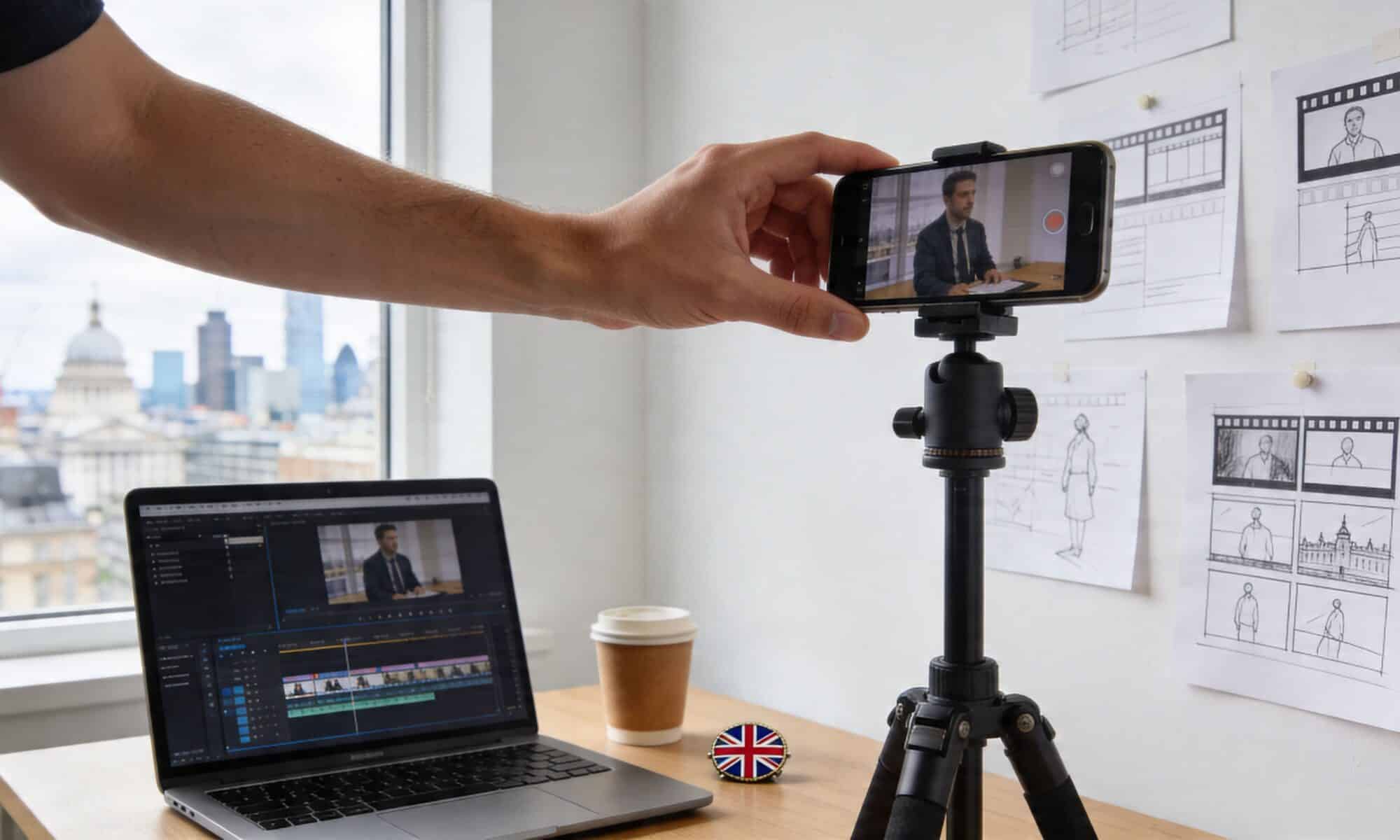
Most brand teams are stuck in the same loop. They brief a video, chase approval rounds, post it, watch views come in, and still can't say whether it moved the business. Then the next video gets commissioned with the same assumptions, the same loose KPI logic, and the same weak feedback loop.
That’s where most social video programmes break. Not at creativity. At strategy, production discipline, and post-launch learning.
A serious marketing agency uk approach treats social video as a system. One asset informs the next. Audience response sharpens creative direction. Platform behaviour changes the edit. Conversion data reshapes the brief. That’s how video stops being content output and starts becoming a growth engine.
Why Social Video Is Your Strongest Asset in 2026
A lot of brands are publishing more video and getting less from it. The feed is crowded, attention is fragmented, and average creative is punished quickly. Social platforms still reward relevance, but they don't reward lazy volume.
The commercial case for getting video right is hard to ignore. The UK digital advertising market generated USD 40,236.9 million in 2024 and is projected to reach USD 95,727.8 million by 2030, with a 15.4% CAGR from 2025 to 2030 according to Grand View Research’s UK digital advertising outlook. The same source states that the UK accounted for 8.2% of the global digital advertising market in 2024, and 72% of UK media experts prioritise social media for campaigns.
That combination changes the brief for every brand and creator. Video isn't just another content format. It sits inside the channel mix that clients are prioritising, funding, and expecting to perform.
Why older social tactics are slipping
Static posts still have a role. So do polished brand shoots. But social video now carries more of the heavy lifting because it can do three jobs at once:
- Capture attention: It stops the scroll faster than most static formats.
- Communicate nuance: Product use, creator credibility, and emotional tone come through quickly.
- Create downstream assets: One strong shoot can feed paid social, organic, creator whitelisting, cutdowns, and landing page media.
A useful companion read on the practical side is Master Video Marketing for Social Media, especially for teams tightening the link between production and channel execution.
Why this matters for influencer-led campaigns
Influencer work performs best when the content feels native to the platform and specific to the audience. That’s one reason many brands are revisiting the benefits of influencer marketing as part of their broader social strategy. Strong creators understand tone, pacing, and audience expectations in ways that many traditional campaign assets still don't.
Practical rule: If a video could run unchanged on every platform, it’s usually too generic for all of them.
The strongest programmes don't ask, “How do we make one hero video?” They ask, “How do we build a repeatable cycle of concepts, testing, learning, and iteration that improves commercial output over time?”
That shift matters more in 2026 than it did a year ago. Brands aren't short on content. They’re short on content systems that produce evidence, not just activity.
The Strategic Blueprint for High-Impact Videos
Good video performance is usually decided before the first frame is shot. Weak planning creates expensive editing problems later. It also produces the most common complaint heard from clients and creators alike: the content looked fine, but it didn’t do anything.
The planning model below works because it keeps creative ambition tied to business intent.
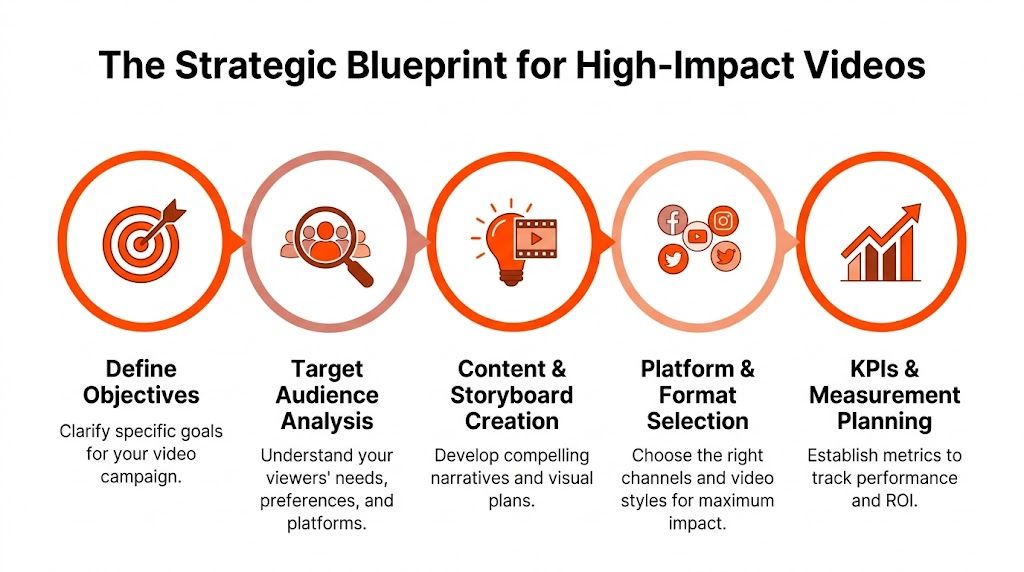
Start with the commercial objective
Many teams begin with format. Reels, TikTok, founder clips, UGC, behind the scenes. That’s backwards.
Start with the business outcome. Is the video supposed to support product discovery, social proof, consideration, direct response, creator partnership credibility, or community engagement? If that answer is vague, the creative will be vague too.
A practical planning stack usually looks like this:
-
Business goal
Sales support, lead generation, brand lift, creator growth, retail sell-through, event attendance, or community building. -
Audience action
Watch, click, save, comment, enquire, buy, or share. -
Content role
Education, demonstration, social proof, reaction, comparison, narrative, or offer delivery. -
Distribution logic
Organic only, paid amplification, creator posting, whitelisting, or multi-platform rollout.
Without that sequence, teams often approve videos that are creatively acceptable but strategically unfocused.
Build from audience truth, not audience labels
“Women 25 to 34” isn’t a strategy. Neither is “Gen Z” or “beauty lovers”. Useful audience planning comes from behaviour, friction, and context.
A better brief asks:
- What does this audience already believe?
- What do they distrust?
- What objection is blocking action?
- What creator voice feels credible to them?
- What does this audience save, not just like?
That last point matters. Saves often signal utility. Shares often signal identity. Comments can signal interest, but they can also signal confusion. Teams need to interpret audience behaviour in context, not as isolated vanity metrics.
The overlooked advantage in multicultural campaigns
One of the most underused opportunities in UK influencer strategy is multicultural audience planning. Too many campaigns treat diversity as casting, not strategy. That usually shows up in weak scripting, generic references, and surface-level creator selection.
The stronger approach starts with community insight and creator fit. According to Multicultural UK, influencer campaigns targeting multicultural segments in the UK can yield up to 2.5x higher engagement. That isn’t a cue to tokenise creators. It’s a cue to brief with more cultural intelligence and stop flattening distinct audiences into one mainstream creative idea.
Campaigns underperform when the brand chooses a creator for audience reach, but ignores whether that creator has the right authority inside the audience’s cultural context.
That distinction matters in beauty, sport, travel, and lifestyle campaigns where trust is built through specificity.
For brands that need a more structured content planning process, a specialist content creation agency can help align creator selection, concept development, and asset planning before production starts.
Match the concept to the platform
A good concept can still fail if it’s forced into the wrong platform behaviour.
TikTok usually rewards immediacy, point of view, cultural fluency, and a looser visual feel. Instagram Reels often performs better when there’s a stronger aesthetic frame, cleaner edit rhythm, and more deliberate brand presentation. YouTube Shorts can absorb slightly more explanation if the hook lands fast enough.
That means the same campaign idea may need three different executions:
| Platform | What usually works | What often fails |
|---|---|---|
| TikTok | Fast hook, direct speech, creator-native framing | Over-scripted brand ad energy |
| Instagram Reels | Polished visual identity, concise structure, strong captions | Flat repurposed horizontal video |
| YouTube Shorts | Clear premise, sharp payoff, compact explanation | Slow intros and buried value |
Platform-native execution doesn't mean abandoning brand standards. It means translating them.
Story structure that keeps people watching
Short-form video still needs structure. Not a film script. A sequence of attention decisions.
A reliable working model is:
- Hook: Stop the scroll with tension, relevance, contrast, or a clear promise.
- Payload: Deliver the useful, interesting, surprising, or validating core.
- Proof: Show result, demonstration, creator credibility, or product evidence.
- Next action: Prompt a comment, save, click, follow, or purchase.
The mistake is overloading the middle. Teams often spend too much time “setting up” the point instead of delivering it. Social audiences don’t need a preamble. They need orientation and payoff.
KPI discipline at the planning stage
A mature video brief defines success before production starts. Otherwise every result gets rationalised after the fact.
Useful KPIs depend on campaign intent, but the discipline is simple:
- Awareness video: Focus on reach quality, hold rate, watch time, and completion patterns.
- Consideration video: Focus on saves, shares, profile visits, clicks, and comment quality.
- Conversion-led video: Focus on traffic quality, add-to-cart behaviour, enquiry intent, and attributed revenue where tracking allows.
Avoid planning around views alone. Views can mean distribution worked. They do not automatically mean persuasion worked.
Mastering Your Social Video Production Workflow
Production problems rarely start on shoot day. They start when the script is too broad, the shot list is missing, and nobody decided whether the asset is meant to feel creator-native or campaign-polished.
A clean workflow fixes that. It doesn't have to be bloated. It has to be deliberate.
With UK audiences increasingly shaped by premium video habits, production standards matter more than many teams admit. According to YouGov’s UK media agencies round-up, 77% of Britons favour streaming services over traditional TV. That raises expectations for pacing, framing, sound, and visual control, even inside social content.

Script for retention, not for reading
Most bad social video scripts sound written. Good ones sound spoken.
That means shorter lines, quicker meaning, and fewer stacked messages. If one video is trying to introduce the product, explain the founder story, handle objections, and push an offer, it usually weakens every one of those jobs.
A production-ready script should identify:
- Opening line: The first spoken or on-screen line has to carry the hook.
- Visual support: What the viewer sees while the point is made.
- Proof moment: Demo, testimonial, screen recording, before-and-after, or creator use case.
- Ending action: The close should match the campaign objective.
A practical test helps here. If the hook only works because of the caption, it probably isn’t strong enough.
Smartphone or camera setup
Many clients waste budget, assuming “professional” means expensive kit. It doesn’t. It means the setup serves the format.
A smartphone setup is often the right call when the aim is speed, native platform feel, or creator-led authenticity. A mirrorless or DSLR setup is stronger when the campaign needs tighter depth control, brand-grade product detail, or a premium visual system across multiple assets.
A simple comparison makes the trade-off clearer:
| Setup | Best use case | Limitation |
|---|---|---|
| Smartphone | Fast-turnaround social content, creator shoots, reactive trends | Less control in difficult lighting and audio environments |
| Mirrorless or DSLR | Hero creator content, polished brand edits, product-led campaigns | Slower setup, larger production footprint |
| Hybrid shoot | Campaign days where both paid and organic assets are needed | Requires tighter planning to avoid style inconsistency |
The wrong choice is usually the one that ignores context. A high-end camera can make creator content feel too polished. A phone can undersell a premium product if lighting and sound are weak.
Audio and lighting are doing more work than the camera
Teams over-focus on resolution and under-focus on clarity. Viewers will tolerate platform-native visuals. They’re far less forgiving of muddy audio and poor lighting.
A lean but reliable production stack often includes:
- Audio: Rode Wireless GO, DJI Mic, or a directional shotgun mic for controlled setups.
- Lighting: Softbox, compact LED panel, or natural window light with diffusion.
- Stability: Tripod, phone clamp, or handheld rig only when movement has a purpose.
- Monitoring: Headphones during capture. Not after.
Production note: Bad audio makes a video feel amateur faster than a slightly imperfect picture ever will.
Lighting also changes credibility. Hard overhead office lighting creates tired skin tones and distracting shadows. Side-lit window setups often outperform more expensive but poorly placed gear.
Shoot in versions, not in singles
One of the smartest workflow changes a brand team can make is to stop producing one finished video and start producing editable components.
That means capturing:
- A clean direct-to-camera take
- Short alternative hooks
- Product close-ups
- B-roll of usage
- Reactions and cutaway moments
- Silent visual sequences for caption-led edits
- End cards or CTA variants
Since the first edit is rarely the final learning, strong social production creates options for iteration without requiring a full reshoot.
For teams scaling creator output, services such as social media video production are typically most useful when they support modular asset planning, not just filming.
Edit for movement and comprehension
Editing isn’t only about style. It’s about keeping the viewer oriented while removing friction.
Strong editors usually focus on four things first:
-
Front-loaded pacing
The first seconds need visual or verbal movement. Static openings lose attention. -
Caption clarity
On-screen text should support the message, not repeat it lazily. Captions need hierarchy. -
Pattern interruption
Jump cuts, angle changes, graphics, zooms, and B-roll should serve retention, not hide weak footage. -
Platform versions
Aspect ratio, safe zones, caption placement, and end-frame design should be adjusted per platform.
A common failure point is overediting. Every effect doesn’t help. Some videos need speed. Others need space. A product demonstration often benefits from cleaner pacing than a reaction-led piece.
Keep approvals from killing the content
Approval layers often flatten the strongest social ideas. Legal, brand, PR, paid social, and creator management all have valid concerns. The issue is sequencing.
The fix is operational:
- Approve the objective first
- Approve the creative territory second
- Approve the script before shoot day
- Limit feedback rounds
- Assign one decision-maker
When every stakeholder edits the video as if it were their own channel, the asset loses voice fast. The strongest production workflows protect clarity from committee drift.
Optimising Video for Maximum Reach and ROI
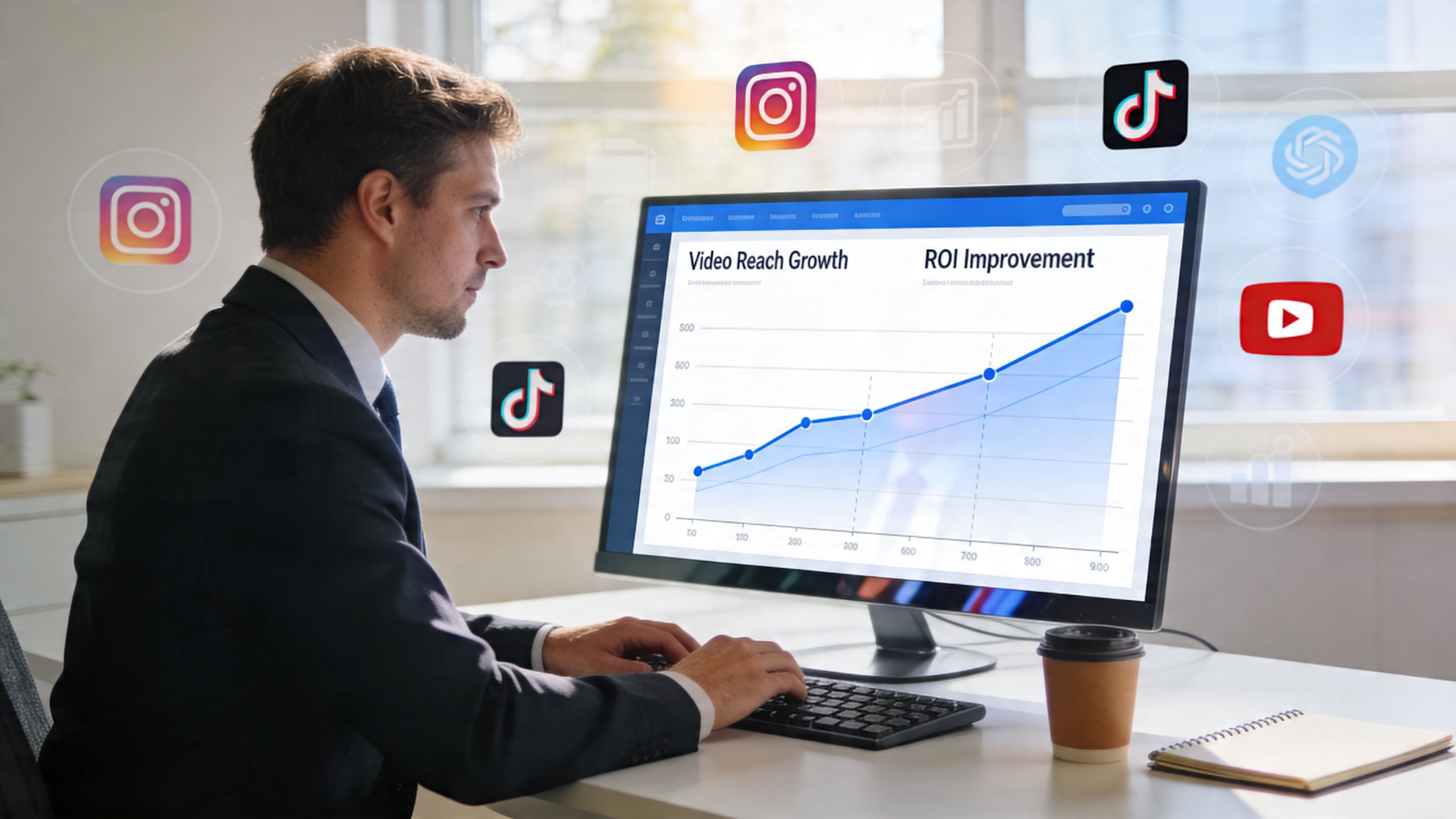
A video can be strong and still underperform if the packaging is weak. Distribution mechanics matter. So does the discipline to read the right signals after launch.
Many brands lose efficiency. They put all their energy into making the asset, then treat posting like admin. In practice, optimisation is where a lot of the commercial lift is found.
Mobile-first isn’t optional
Video optimisation has to start with the way people consume content. The smartphone segment is the largest and fastest-growing platform for digital content consumption, as noted in the earlier market data. That changes framing, editing, text placement, and CTA design.
The practical implications are straightforward:
- Use vertical framing first
- Keep key text away from interface areas
- Make the message legible without sound
- Show the product or speaker clearly on a small screen
- Cut any visual detail that only works on desktop
A lot of underperforming social content is badly adapted to mobile attention.
Packaging decisions that change performance
The same core video can behave differently depending on how it’s presented. That’s why strong operators treat titles, first-frame visuals, captions, and hashtags as testable variables.
The highest-impact levers are usually:
- Hook line on screen: This often matters more than the platform caption.
- Cover frame or thumbnail: It should promise a reason to watch, not just look tidy.
- Caption copy: Clarify context, reinforce the value, or create a reason to respond.
- Hashtag selection: Keep them relevant to intent, niche, and discoverability. Avoid stuffing.
- Posting timing: Publish when the audience is likely to engage meaningfully, not just when the team is free.
The first frame is doing sales work. Treat it like ad creative, not decoration.
A/B testing helps, but only when variables are isolated. If the hook, cover, caption, and posting time all change at once, the result becomes hard to interpret.
Read performance with business intent in mind
The right KPI depends on what the video was meant to do. That sounds obvious, but in practice teams still mix awareness metrics with conversion claims.
Here’s a practical reference point.
| Platform | Primary KPI | Secondary KPI | Business Goal Alignment |
|---|---|---|---|
| TikTok | Watch time and retention | Shares and profile visits | Discovery, creator growth, top-of-funnel demand |
| Instagram Reels | Saves | Comments and link clicks | Consideration, community response, product interest |
| YouTube Shorts | Average view duration | Subscribers and clicks to longer content | Education, authority building, audience warming |
| Paid social video | Cost-efficient qualified action | Landing page behaviour | Lead generation, sales support, measurable conversion |
That’s where strategic support matters. A consultancy or specialist team such as social media consulting can help define which signals matter by objective, instead of defaulting to broad reporting dashboards.
What to ignore and what to investigate
Not every visible metric deserves equal weight.
Less useful in isolation:
- Raw views
- Follower growth from a single post
- Impressions without downstream behaviour
- High comment counts with low-quality sentiment
More useful when diagnosing performance:
- Retention drop-off point
- Replay behaviour
- Save rate
- Click intent
- Comment quality
- Conversion path behaviour after the click
When a video loses viewers early, the problem is usually the hook, opening visual, or mismatch between first-frame promise and actual content. When people watch but don’t act, the issue is often weak proof, unclear CTA, or poor offer alignment.
Optimisation after launch
The strongest social teams don't leave a decent video untouched if the underlying creative is solid.
Post-launch actions can include:
-
Re-edit the opening
Change the first spoken line, reframe the first caption, or lead with proof sooner. -
Swap the cover frame
Especially useful when the hold rate is decent but initial opens are weak. -
Shorten the middle
Remove explanatory drag. Keep the payload tighter. -
Repost with a different angle
Same footage, different lead-in. Often effective when the original concept was right but the framing wasn't. -
Move strong comments into the next iteration
Questions, objections, and repeated praise give the next script better raw material.
This is the point many one-off content plans miss. Optimisation isn’t the final stage. It’s the start of the next creative cycle.
Turning Engagement into a Sustainable Growth Engine
A brand posts a strong video, sees a spike in comments and shares, then moves straight onto the next idea with no clear carryover. A month later, output is still busy, but performance is inconsistent. The problem usually is not effort. It is the lack of a system that turns response into sharper creative decisions.
That system is what gives social video long-term value. Each post should improve the brief, the edit, the creator mix, and the offer framing for the next one.

Use every video to improve the next one
An iterative video strategy treats performance as input, not a verdict. The useful question is rarely “did it work?” A better question is “what exactly should change in the next version?”
That shift improves output fast. Teams start building from evidence instead of preference.
Questions worth asking after each release include:
- Which hook structure kept the right viewers watching?
- Which creator framing drove more saves or shares?
- Which objection kept appearing in comments or DMs?
- Which proof sequence pushed viewers towards the click?
- Which CTA phrasing brought in traffic that converted?
As noted earlier, UK marketers expect digital video and social distribution to become even more closely linked. That makes a repeatable operating model more practical than running disconnected campaign bursts.
Community signals often beat headline engagement numbers
A comment section can tell you more than a reporting dashboard if someone on the team knows how to read it properly.
“Need this” signals lightweight interest. “Will this work for oily skin?” signals purchase consideration. “Can you show how to use it with X?” points to the next creative angle. Saves on educational content often indicate future intent. Likes on trend-led posts can mean very little on their own.
Useful signals include:
- Repeated objections
- Natural audience language
- Requests for follow-up content
- Creator-audience rapport
- Questions that show buying intent
A strong comment section is public market research, if the team captures and uses it.
Creator partnerships also become more strategic at this stage. A creator is not only a distribution channel. They are part of the feedback loop. Their audience surfaces the claims that land, the visuals that create confusion, and the proof gaps that still need closing.
Teams that want a stronger framework for reading and responding to audience interaction can review these proven strategies to increase social media engagement. The useful takeaway is not volume for its own sake. It is better audience response that improves future creative decisions.
Repurpose what earns attention
Repurposing only works when the team understands why a video performed in the first place.
A strong social asset can be rebuilt into:
- A paid social cutdown
- A landing page video
- A creator ad variation
- A story sequence
- A still carousel
- A community management talking point
- A follow-up FAQ video
- A longer explainer for another channel
The trade-off is simple. Reusing footage saves time, but copying the same asset across placements usually weakens performance. Organic content often wins on immediacy. Paid placements usually need tighter framing, clearer captions, and stronger offer context.
Know when to commit to a winning format
Brands often drop effective formats too early because they worry about repetition. In practice, audiences respond well to familiar structures when the angle, creator, or proof point stays fresh.
Signals worth building around include:
- A repeatable hook format
- A creator whose audience asks commercially useful questions
- A recurring product use case
- An edit style that improves retention consistently
- A proof format that moves viewers from interest to action
Strong brands tend to look consistent for a reason. They stay in the same strategic lane and refresh the execution inside it. That usually beats chasing every new format the platform throws up.
Where agency support changes the outcome
An in-house team or solo creator can get a long way alone. The strain usually shows up when content has to scale across multiple creators, usage rights, approvals, paid adaptations, and reporting cycles at the same time.
That is usually the point where a specialist marketing agency uk partner adds value. The role is not to replace internal judgment. It is to add process, production control, and performance discipline without slowing the programme down.
In practice, that can mean:
| Need | What specialist support helps with |
|---|---|
| Creator selection | Matching audience fit, brand safety, and campaign role |
| Creative development | Turning business goals into platform-native concepts |
| Production management | Building modular assets for multiple uses |
| Performance analysis | Separating commercial signals from surface metrics |
| Scaling | Coordinating repeatable cycles across multiple campaigns |
One option in that category is Colossal Influence, which works across influencer talent management and influencer marketing consultancy for brands, PR agencies, and creators.
Better systems beat one-off wins
The strongest video programmes run on a loop:
- Start with a commercial objective
- Build for platform behaviour
- Package and distribute with intent
- Read audience and conversion signals
- Apply those findings to the next brief
That loop creates momentum. It also makes creative quality more stable over time because every video sharpens the next one.
Brands and creators getting the best return from social video usually treat each post as both an asset and a test. They are not waiting for another lucky hit. They are building a system that improves with every cycle.
Follow us on Social Media


