
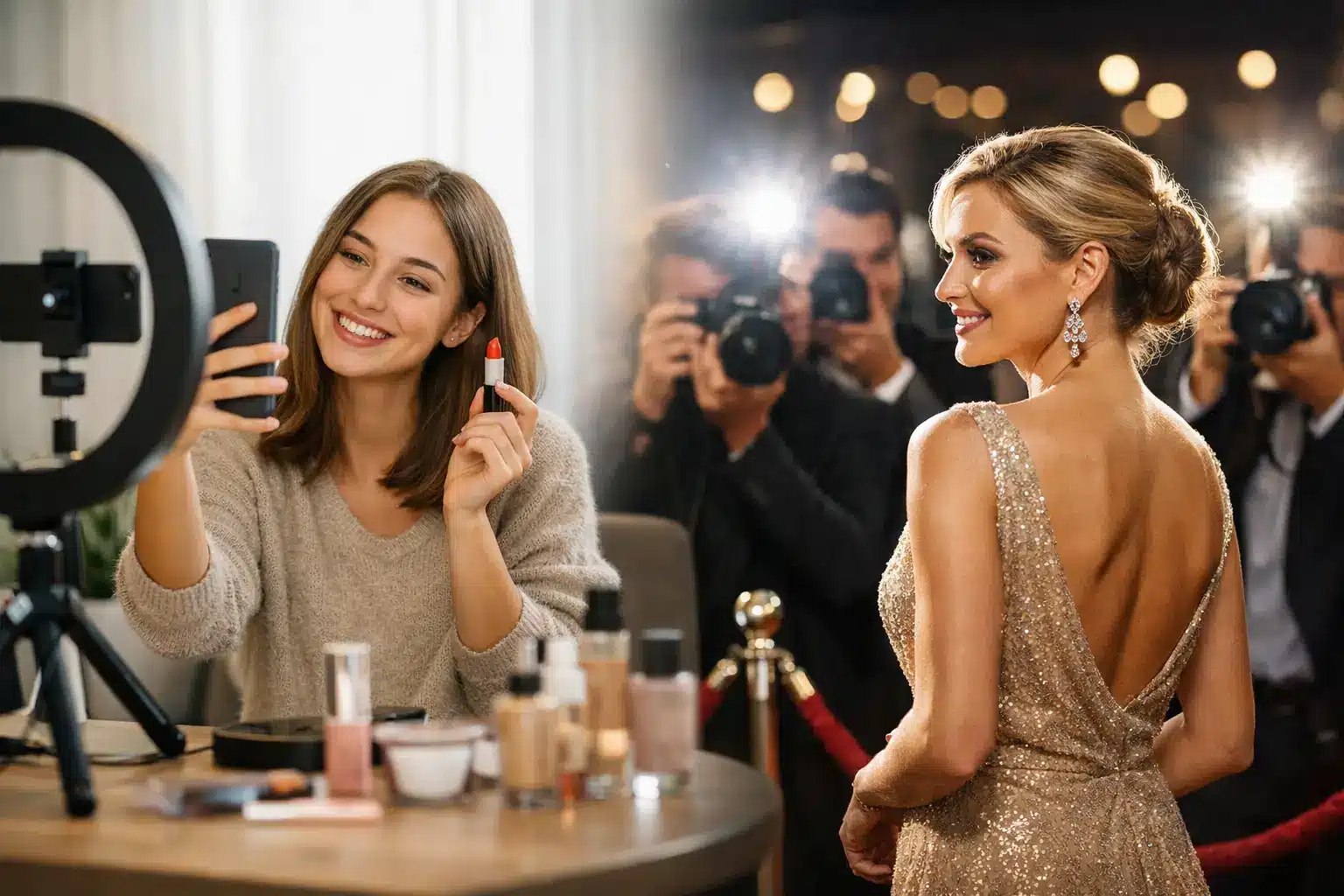
A creator with 30,000 highly engaged followers can outperform a household name when the brief requires credibility, product understanding and action. That is the commercial reality behind micro influencers vs celebrities. The right choice is not about picking the biggest audience available. It is about matching the creator’s influence, format and audience relationship to the outcome your campaign needs to achieve.
For UK brands and agencies, this decision affects far more than media spend. It shapes content quality, campaign timing, approvals, usage rights, brand safety and the ability to measure a meaningful return. Celebrity and micro-influencer partnerships both have clear value, but they solve different problems.
Micro influencers vs celebrities: the commercial difference
Micro influencers generally have a smaller but defined audience, often somewhere between 10,000 and 100,000 followers. The exact threshold varies by platform and category. What matters is that their communities tend to form around a clear shared interest: skincare, football, fitness, interiors, parenting, travel or a particular local scene.
Celebrities operate at a different level of public awareness. Their audience is broader, their recognition is immediate, and their association can place a brand into a major cultural conversation quickly. A celebrity campaign may deliver reach that would take dozens of creators to build. It can also attract press attention beyond the creator’s own channels.
The trade-off is simple. Celebrity influence is often built on fame and scale. Micro-influencer influence is more often built on relevance and proximity. Neither is automatically more effective. A brand launching a mass-market product nationally may need rapid awareness. A specialist beauty brand seeking qualified consideration may benefit more from trusted, detailed creator recommendations.
When micro influencers are the stronger investment
Micro influencers are particularly effective when a campaign needs to feel credible rather than broadcast-led. Their followers often expect regular product recommendations, opinions and practical demonstrations. When the partnership fits their established content, sponsored work can sit naturally alongside organic posts.
This is especially valuable in categories where people want evidence before they buy. Beauty, wellness, fashion, food, travel and technology accessories all benefit from creators who can show how a product works in real life. A well-briefed creator can answer the questions an advert cannot: how the product fits into a routine, who it is suitable for, whether it offers value and what the experience is actually like.
Micro-influencer programmes also give brands flexibility. Instead of placing the entire budget behind one person, a campaign can work with a group of creators across audience segments, locations and formats. This creates a more varied content library and reduces the risk attached to any single partnership.
That does not mean smaller creators are a low-effort option. A programme involving 20 creators requires careful sourcing, clear briefing, contracts, content management and reporting. Without structure, the result can become inconsistent quickly. The value comes from selecting creators whose audience, creative style and commercial standards genuinely fit the campaign.
The advantage of niche authority
A micro influencer does not need to be famous to influence a buying decision. In fact, niche authority can be more valuable than general recognition when the target customer is specific. A creator known for honest curly hair routines may be a stronger partner for a haircare launch than a celebrity with a much larger but less targeted following.
Audience quality matters here. Brands should look beyond follower count at engagement patterns, comment quality, demographic fit, historic brand work and the creator’s ability to communicate naturally on camera. High engagement alone is not proof of commercial value, but it is a useful starting point when it is supported by genuine audience alignment.
When celebrity partnerships earn their premium
Celebrity campaigns are built for scale, memorability and high-impact brand association. A recognised name can give a product launch instant visibility and help a brand cut through a crowded category. For established consumer brands, retail moments, seasonal campaigns and new product launches, that visibility can justify a larger investment.
The strongest celebrity partnerships do more than borrow a famous face. They establish a believable connection between the individual and the brand. If the audience cannot understand why that person is promoting the product, attention may be high but persuasion will be limited.
Celebrities can also create valuable momentum across paid media, PR, retail and social. A partnership may provide campaign content, launch-event attendance, interviews, media coverage and assets that support wider advertising. This makes the commercial calculation broader than the performance of one social post.
However, celebrity talent usually commands higher fees, stricter availability and more complex approval processes. Brands also need clarity on deliverables, exclusivity, content usage, morality clauses and cancellation terms before a campaign is confirmed. The cost of getting these details wrong is considerably higher when the talent fee and public profile are significant.
Reach is not the same as relevance
A celebrity can reach millions of people who will never be prospective customers. That is not necessarily a weakness if the objective is mass awareness, but it can be inefficient for a campaign focused on conversion or a tightly defined audience.
The same principle applies to creators with very large social followings. Impressive numbers should not distract from the core question: will this audience pay attention to this message from this person? Strong campaign planning starts with the customer and objective, then identifies the type of influence required.
Cost, control and content rights
Fee comparisons can be misleading. A celebrity may cost more upfront but generate assets, attention and press value that extend well beyond their own post. A group of micro influencers may offer stronger engagement and more usable content, but the campaign will require greater coordination and a more detailed creator management process.
Brands should assess total value rather than a simple cost-per-post figure. This includes creator fees, production requirements, paid usage rights, exclusivity, gifting, agency management, amplification budget and reporting. A campaign that appears inexpensive can become poor value if the content cannot be reused, the creator is not available for revisions or the audience is wrong.
Usage rights deserve particular attention. Organic creator content and paid advertising are different commercial uses. If a brand intends to run creator content through paid social, retail screens, email or wider advertising, those rights should be agreed in advance. The same applies to whitelisting arrangements, timings and territories.
Creators also need fair, transparent commercial terms. Clear expectations protect both parties and help build relationships that can continue beyond a one-off activation. This is where experienced talent representation and campaign management can remove friction from negotiations without stripping the creator’s work of its value.
Choose by objective, not by status
The most effective campaigns begin with a direct brief. Are you trying to introduce a brand to a large audience, drive sales during a specific retail window, generate trusted reviews, create paid social assets or shift perception within a niche community? The answer should shape the talent strategy.
Use celebrity talent when broad awareness, cultural relevance and high-profile association are central to the campaign. Use micro influencers when authenticity, category credibility, audience specificity and a volume of varied content matter most. For many brands, the best answer is a mix: a prominent ambassador creates attention, while specialist creators provide the proof, product education and frequency that move people closer to purchase.
This approach also allows different platforms to do different jobs. A celebrity may be ideal for a high-impact launch film or Instagram announcement, while micro creators can make informative TikTok videos, detailed YouTube content or relatable Stories that answer customer objections in a less polished setting.
Measure the outcome that matters
Vanity metrics can make any campaign look successful. Reach, likes and views are useful indicators, but they are not the whole commercial picture. Measurement should reflect the agreed objective from the beginning.
For awareness activity, look at reach, video completion, sentiment, earned attention and brand-lift signals where available. For consideration, assess saves, shares, meaningful comments, website visits and the quality of questions audiences ask. For conversion, use trackable links, codes, sales data, affiliate performance or retailer uplift alongside the wider content results.
It is also worth reviewing creative performance rather than treating every creator post as interchangeable. Which hooks held attention? Which product messages generated comments? Which creator formats performed best once amplified? Those insights make the next campaign more efficient and help identify talent worth developing into long-term partners.
Colossal Influence approaches talent selection as a commercial decision, not a popularity contest. The right creator partnership should have a defined role in the campaign and a clear basis for measuring its contribution.
The useful question is not whether micro influencers or celebrities are better. Ask what your audience needs to believe, feel or do next – then invest in the people best placed to make that happen.
Follow us on Social Media


