

You can think of an influencer agent as the career architect for a social media creator, much like a sports agent goes to bat for a top athlete. Their main job is to handle the business side of things—finding brand deals, thrashing out contracts, and managing partnerships—so the creator can just focus on what they do best: making great content.
What Exactly Is an Influencer Agent?
Essentially, an influencer agent is a strategic partner laser-focused on your commercial growth. While you’re busy creating brilliant videos, posts, and stories, your agent is working behind the scenes to turn your passion into a proper, profitable business. Their day-to-day role can be incredibly varied, but it always comes back to one thing: pushing your professional interests forward.
This has become absolutely vital as the creator economy has grown up. It’s not just about getting a few freebies anymore; this is serious business. The UK influencer marketing industry alone was valued at around USD 2.36 billion this year, and it’s expected to explode to a staggering USD 24.15 billion by 2033. This massive growth, driven by people trusting influencers more than old-school ads, really shows why professional representation is no longer a luxury. You can dig into more of the numbers in the full UK market report from IMARC Group.
The Agent’s Core Mission
An agent’s role is about so much more than just finding the odd sponsored post. They’re actively shaping a creator’s professional brand and making sure they get paid what they’re worth for their influence.
Their core responsibilities usually boil down to a few key areas:
- Deal Sourcing: They’re constantly on the lookout, proactively finding and checking brand partnership opportunities that actually fit the creator’s niche and values.
- Contract Negotiation: They handle all the back-and-forth to secure better pay, fairer terms, and crystal-clear deliverables. This is crucial for protecting creators from dodgy agreements.
- Relationship Management: They become the main contact for brands, handling all the comms and making sure campaigns run smoothly from kick-off to completion.
- Career Strategy: They offer genuine advice on which opportunities to take and, just as importantly, which ones to turn down to build a credible, long-lasting personal brand.
For creators, an agent opens doors to bigger deals and frees up countless hours they’d otherwise spend on admin. For brands, an agent is a professional, streamlined way to connect with top-tier talent, making the whole collaboration process smoother and more dependable.
At the end of the day, working with an influencer agent professionalises a creator’s entire operation. They bring the business savvy and industry connections needed to find your way in a really competitive space. To get a better handle on this, our detailed guide on what an influencer agent does can give you even more insight. This kind of partnership lets creators get back to doing what they truly love—creating.
Agent vs Manager vs Agency Unpacked
If you’re trying to get your head around the world of creator representation, you’re not alone. It can feel like learning a whole new language. You’ll hear terms like influencer agent, manager, and agency thrown around, often as if they mean the same thing. They don’t.
Getting a grip on these differences is vital, whether you’re a creator looking for the right support or a brand trying to find the best way to partner with talent.
At its heart, the difference boils down to two simple things: who they work for and what their main goal is. An influencer agent is your dealmaker. Think of them like a traditional talent agent in Hollywood. Their entire focus is to get out there, find you paid partnerships, and negotiate the best possible terms. They are on your team, fighting for your bottom line.
An influencer manager, on the other hand, plays a much broader role in your career. Yes, they might handle some deals, but they’re really your strategic partner. They’re the one helping you think long-term, map out your brand’s future, and explore new ventures like launching a podcast or a merchandise line.
The Agency Perspective
This is where things really diverge. An influencer marketing agency works for the brand, not the creator. It’s a crucial distinction. Brands hire agencies to dream up, run, and manage their influencer campaigns from start to finish.
Agencies have a network of creators they can call upon, but their loyalty and contract is with the brand paying the bills. Their job is to deliver results for that brand, and influencers are the vehicle they use to do it.
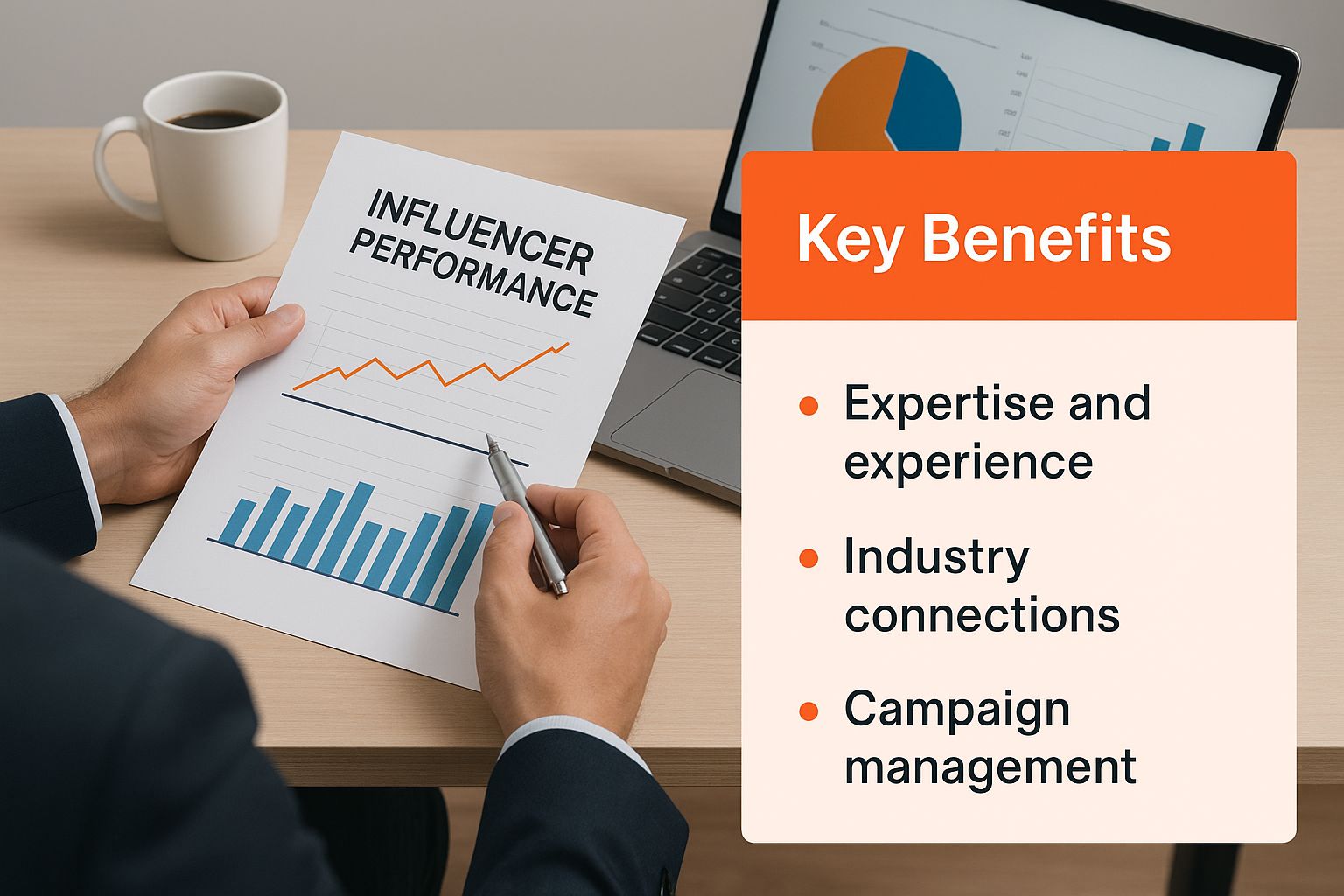
As you can see, professional representation is all about turning creative influence into tangible business results—a massive win for both the creator and the brand when done right.
Comparing Key Differences
To make it even clearer, let’s put these roles side-by-side. It’s like picking the right tool for a job; you wouldn’t bring a hammer to turn a screw. Knowing what you need most will immediately point you towards the right kind of professional.
Key Takeaway: An agent finds you work. A manager builds your career. An agency gives brands access to you for their campaigns.
The table below breaks down the fundamental differences between these three key players in the creator economy.
Agent vs Manager vs Agency: A Quick Comparison
This table clearly outlines the key differences between influencer agents, managers, and marketing agencies to help you understand which is right for your needs.
| Role | Primary Client | Core Focus | Typical Payment Structure |
|---|---|---|---|
| Influencer Agent | The Creator | Securing and negotiating brand deals and paid partnerships. | Commission-based (typically 10-20% of deals they secure). |
| Influencer Manager | The Creator | Long-term career development, brand strategy, and overall growth. | Commission-based (often on all income streams) or a monthly retainer. |
| Marketing Agency | The Brand | Executing campaigns, managing budgets, and delivering ROI for the brand. | Paid a service fee or retainer by the brand they represent. |
Understanding these roles is the first step to making the right connection. It ensures you’re not wasting time talking to the wrong people, whether you’re a creator ready to scale your income or a brand aiming for a perfectly executed campaign.
How an Agent Supercharges a Creator’s Career

Let’s move past the textbook definitions. The real magic of an influencer agent is in the impact they have on a creator’s career. Think of them less as a service and more as a career accelerator. They don’t just find you deals; they build your commercial momentum, turning your creative potential into a proper, profitable business.
Imagine getting back all those hours you lose each week digging through emails, chasing up late invoices, and having those awkward conversations about money. An agent scoops up all that admin, leaving you free to do what you do best: create brilliant content. That shift alone is a game-changer for your output and creative energy.
But the real heavyweight advantage is their negotiation skill. An agent lives and breathes industry rate cards, knows every contractual trap, and understands a creator’s true market value. They go to bat for you, often securing much higher fees and better terms than you could on your own.
Unlocking Exclusive Opportunities
One of the most powerful things an agent does is act as a connector and a gatekeeper. Brands and agencies with the most exciting, high-value campaigns? They often go straight to the agents they trust. It saves them time and guarantees they’re working with professional, vetted talent.
This means that as a represented creator, you get the first look at opportunities that others might never even see. An agent’s little black book is their superpower, and by extension, it becomes yours. This is how you land those career-defining partnerships with your dream brands.
This access is only becoming more important as brand investment grows. In the UK, influencer marketing spend is rocketing, with about 25% of marketers now putting over 40% of their total marketing budgets into influencer campaigns. With that kind of money on the line, brands need reliable partners, which puts professional agents right at the centre of the action. You can see more on these brand spending trends on Shopify’s blog.
The Strategic Buffer and Partner
An agent also provides a vital professional buffer. They handle the tricky chats about money, deliverables, and usage rights, which keeps the relationship between you and the brand purely positive and creative. Keeping business separate from creativity is priceless.
An agent isn’t just a service provider; they are a strategic partner. Their success is directly tied to yours, creating a powerful alignment of goals dedicated to maximising your earnings and building a long-term career.
At the end of the day, an agent brings a lot more than just deals to the table. They offer:
- Expert Negotiation: Pushing for better pay, clearer scopes of work, and protective contract clauses.
- Industry Access: Connecting you with exclusive, high-budget campaigns through established relationships.
- Administrative Freedom: Handling the time-sucking tasks of outreach, scheduling, and invoicing.
- Strategic Guidance: Advising on which partnerships will boost your brand and, just as importantly, which ones to steer clear of.
Bringing an agent on board is a serious investment in your professional future. They provide the structure, the expertise, and the connections you need to go from being a hobbyist to a real business owner in the creator economy.
Why Brands Prefer Represented Creators
From a creator’s point of view, having an agent seems like a no-brainer. But flip the coin, and you’ll find that brands actively search for—and often prefer—creators with representation. The reason isn’t complicated. It all comes down to three huge advantages: efficiency, professionalism, and security. For any busy marketing team, these aren’t just nice little perks; they’re vital for running campaigns that don’t fall apart.
Working with an influencer agent completely changes the partnership dynamic, and for the better. Just imagine a brand wants to work with ten different creators. Without agents, that’s ten separate outreach emails, ten different contract negotiations, ten sets of invoices to process, and ten people to chase for every little question or approval. It’s an administrative nightmare that just drains time and money.
An agent cuts through all that noise. They become that single, reliable person who knows the process inside and out. This simplifies everything, from the first hello to the final payment, letting the brand’s team actually focus on strategy instead of getting swamped by repetitive admin.
The Value of a Vetted Partner
Beyond just making life easier, agents act as a much-needed quality filter. When a brand gets a pitch from an agent, they can breathe a little easier, knowing the creator has already been vetted. This isn’t just about having a big follower count; it’s about basic professionalism.
Represented creators are far more likely to get professional etiquette, hit their deadlines, stick to the brief, and understand the unwritten rules of a commercial deal. This massively reduces the risk of a campaign going completely off the rails.
You can’t put a price on that kind of risk reduction. A brand puts its budget and, more importantly, its reputation on the line with every campaign. Working with someone unprofessional or unreliable can be disastrous. An agent is a layer of assurance, signalling that the talent they’re hiring is ready to collaborate properly. For brands trying to build real, lasting partnerships, seeing that professional structure in place is a massive tick in the box. Grasping this is key to figuring out why to work with an influencer agency from the brand’s perspective.
Smoother Campaigns and Better Outcomes
When it comes down to it, this preference for represented talent simply leads to better results for everyone. The benefits for brands are crystal clear:
- Time Savings: A huge drop in the administrative slog and fewer communication headaches.
- Professionalism Guaranteed: Confidence that the creator actually understands their contractual responsibilities.
- Simplified Negotiations: You’re dealing with an experienced agent who knows the industry standards for contracts and pricing.
- Problem Resolution: There’s a professional go-between to sort out any issues that might pop up during a campaign.
This structured way of working fosters a more respectful and productive partnership. The creator gets to do what they do best, the agent handles the business side of things, and the brand enjoys a smoother campaign with a much higher chance of hitting its goals. It’s a professional ecosystem that just delivers better outcomes all around.
How to Find the Right Influencer Agent
Finding the right influencer agent is much less like hiring someone and more like picking a business partner. Honestly, your success is tied directly to their skill and commitment, so getting this decision right from the get-go is critical. It’s not just about finding someone who can land you deals; it’s about finding a professional who gets your niche, shares your vision, and is genuinely invested in your career for the long haul.
The first step is simply to do your homework. Start looking for agents who specialise in your content area, whether that’s beauty, gaming, travel, or comedy. A generic, one-size-fits-all agent probably won’t have the specific brand contacts or deep industry knowledge you really need to grow.
Vetting Potential Candidates
Once you’ve got a shortlist, it’s time to do some digging. Think of this as proper due diligence to protect your brand and your career. Any great agent will have a proven track record of success with creators similar to you. Don’t be shy about asking for case studies or even references.
Take a good look at their current roster of talent. Are they representing creators who are your direct competitors? While a little bit of overlap is normal, you need to make sure there isn’t a conflict of interest that could see you fighting for the exact same opportunities. Most importantly, trust your gut. This is a close working relationship, and a good personality fit is absolutely vital for a healthy, productive partnership.
Before you jump on a call or into a meeting, prepare a list of targeted questions. This shows you’re serious about your business and helps you compare candidates properly, ensuring you cover all the crucial points of the potential partnership.
With influencer marketing becoming more and more sophisticated, it’s worth noting how many strategies now use AI to improve everything from picking creators to tracking performance. A huge number of marketers have seen better campaign results thanks to this tech, so a forward-thinking agent should definitely be aware of these trends. You can find out more about how technology is shaping the industry in this influencer marketing benchmark report.
Key Questions to Ask an Agent
To make sure you’re making an informed decision, arm yourself with these essential questions before signing anything:
- How do you find brand deals for your clients? Are they actively pitching you out there, or do they mostly sit back and wait for emails to come in?
- What’s your commission structure? You need to understand exactly what percentage they take and what services that fee actually covers. You can get more details on how influencer agencies make money in our guide.
- Can you walk me through the key terms in your standard contract? Pay very close attention to the contract length, any exclusivity clauses, and the conditions for ending the agreement.
- How do you handle communication and reporting? You need to know how often you’ll be in touch and how they’ll keep you updated on their progress.
Getting Real About Influencer Agents: Separating Myth from Reality
There are a lot of misconceptions floating around about influencer agents. If you’re thinking about partnering with one, it’s crucial to have realistic expectations and understand what they actually do. Let’s cut through the noise and tackle some of the most common myths head-on.
One of the biggest fictions is that influencer agents are only for the mega-stars with millions of followers. That’s just not the case anymore. Agents are increasingly signing creators with smaller, but hyper-engaged, audiences. What they’re really looking for is commercial potential and professionalism, not just a massive follower count.
Another popular belief? Signing with an agent means you’ll suddenly be drowning in brand deals. This couldn’t be further from the truth.
Quality Over Quantity
An agent’s job isn’t to find you any opportunity; it’s to find you the right one. They operate on commission, which means their motivation is to lock in high-value, perfectly aligned partnerships that build your personal brand for the long haul.
Their goal is sustainable career growth, not a quick-fire round of low-quality sponsored posts that could tank your credibility with your audience.
The reality is that agents are selective and strategic. They are investing their time and resources into your career, so they need to see a clear path to generating revenue through brand partnerships that make sense for your unique personal brand.
It’s also essential to understand the limits of their role. A massive point of confusion is mixing up an agent with a manager.
Agent vs. Manager: A Critical Distinction
While you might see some overlap, their core jobs are fundamentally different. An agent is almost entirely focused on one thing: sourcing and negotiating commercial deals. Think of them as your dedicated dealmaker.
A manager, on the other hand, takes a much wider view of your entire career. They’re the ones advising on content strategy, audience growth, launching new ventures like merch, and shaping your overall brand direction. An agent gets you paid, but a manager helps you build the empire.
If you’re actually after someone to guide every single part of your professional life, you might be better off exploring influencer management services instead.
Knowing the reality of the situation helps you search for an agent with a clear head. It prevents disappointment and sets you both up for a partnership that’s successful and genuinely beneficial for everyone involved.
Got Questions About Influencer Agents? We’ve Got Answers
Right, as we start to wrap things up, you probably have a few practical questions bouncing around your head. That’s completely normal. Choosing the right representation is a huge step in your career, so let’s get into the most common queries creators have before they even think about looking for an influencer agent.
The question I hear most often is about timing. When is it actually the right time? Honestly, there’s no magic follower count. The best time to start looking for an agent is when brand deals begin to eat up a significant chunk of your day—time you’d much rather be spending on creating content. If you’re getting a steady stream of offers and the back-and-forth of negotiations and paperwork is becoming a headache, you’re probably ready.
How Fees and Contracts Work
The other big topic is, of course, money. What’s this going to cost?
In the UK, the standard commission for an influencer agent usually falls somewhere between 10% and 20%. This slice is only taken from the deals the agent brings to the table and secures for you. A word of caution: be very suspicious of anyone asking for a big fee upfront. The industry standard is a partnership based on commission. The agent only makes money when you make money. Simple as that.
When a contract lands in your inbox, treat it like the critical business document it is. Any clause that feels fuzzy, vague, or overly controlling is a massive red flag. Pay special attention to the contract length and, crucially, the terms for ending the agreement.
A good contract should feel balanced, fair, and easy to understand. Here are a few major red flags to keep an eye out for when you’re reading through an agreement:
- Unreasonable Exclusivity: Be wary of clauses that try to claim a commission on deals you find yourself, or on partnerships you had before you signed with them.
- Vague Promises: The contract needs to clearly spell out what the agent will actually do for you. If it’s full of broad statements but short on specifics, that’s a warning sign.
- No Clear Exit Route: You must have a crystal-clear understanding of how to terminate the contract if the relationship just isn’t working out.
At the end of the day, picking an agent is about finding a professional partner who will genuinely champion your career. By asking the right questions and knowing what to look out for, you can walk into this decision with confidence and find the perfect fit to help your brand grow.
Ready to take your creator career to the next level with professional representation? Colossal Influence has over a decade of experience in talent management, helping influencers secure meaningful brand partnerships. Explore how we can support your growth.
Follow us on Social Media


